New Zealand has always been high on my list of places to visit. From the tropical rainforests, volcanos and rolling hills of the north, to the alpine landscapes, the fjords and the glaciers in the south, New Zealand has it all and is truly a one-of-a-kind travel destination. Because New Zealand is very far from home, I decided to make it a part of a larger trip to the region, including Australia and Tasmania. I started my trip to New Zealand on the North Island and traveled my way down south to cross over to the South Island.
Muriwai Gannet colony
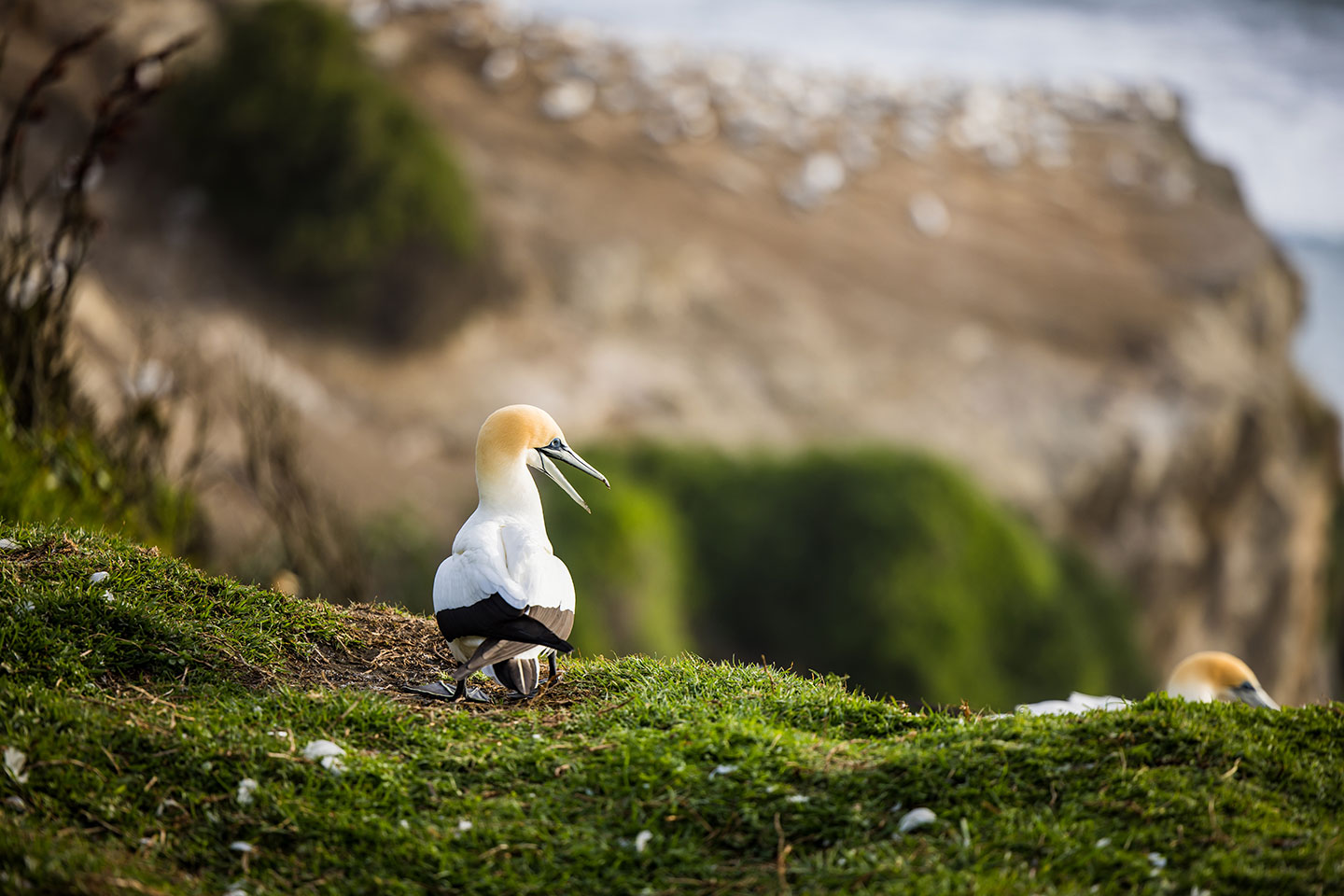
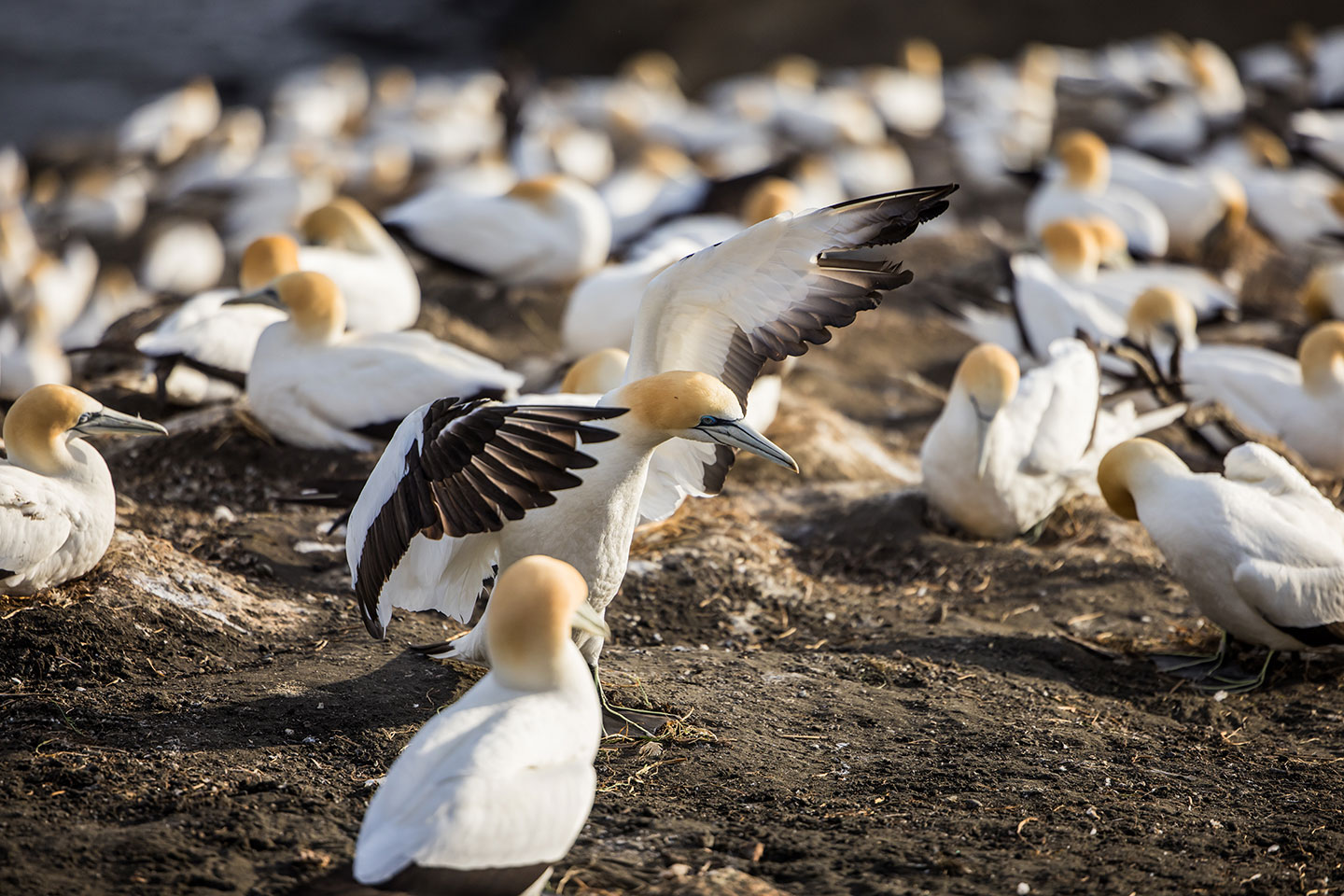
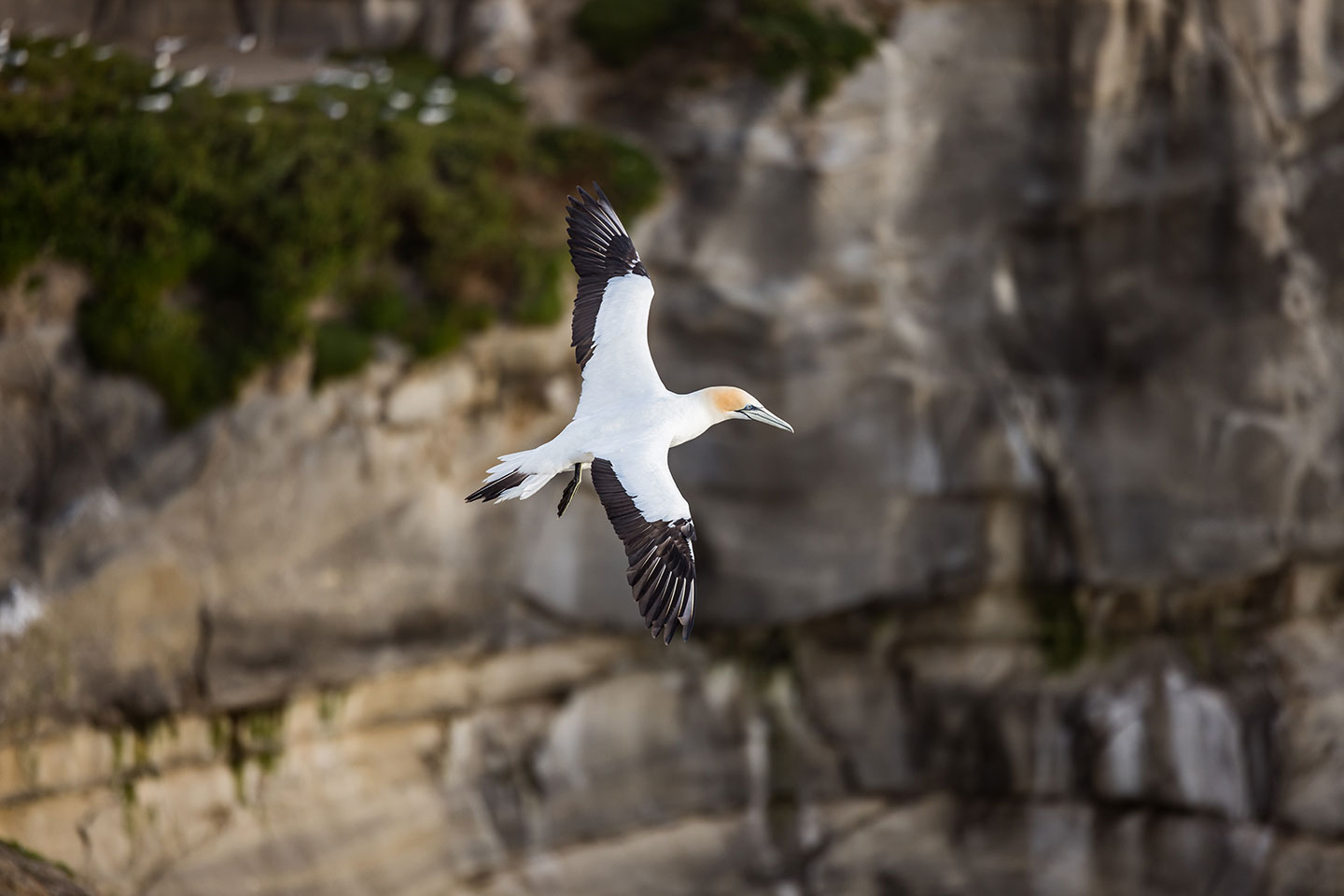
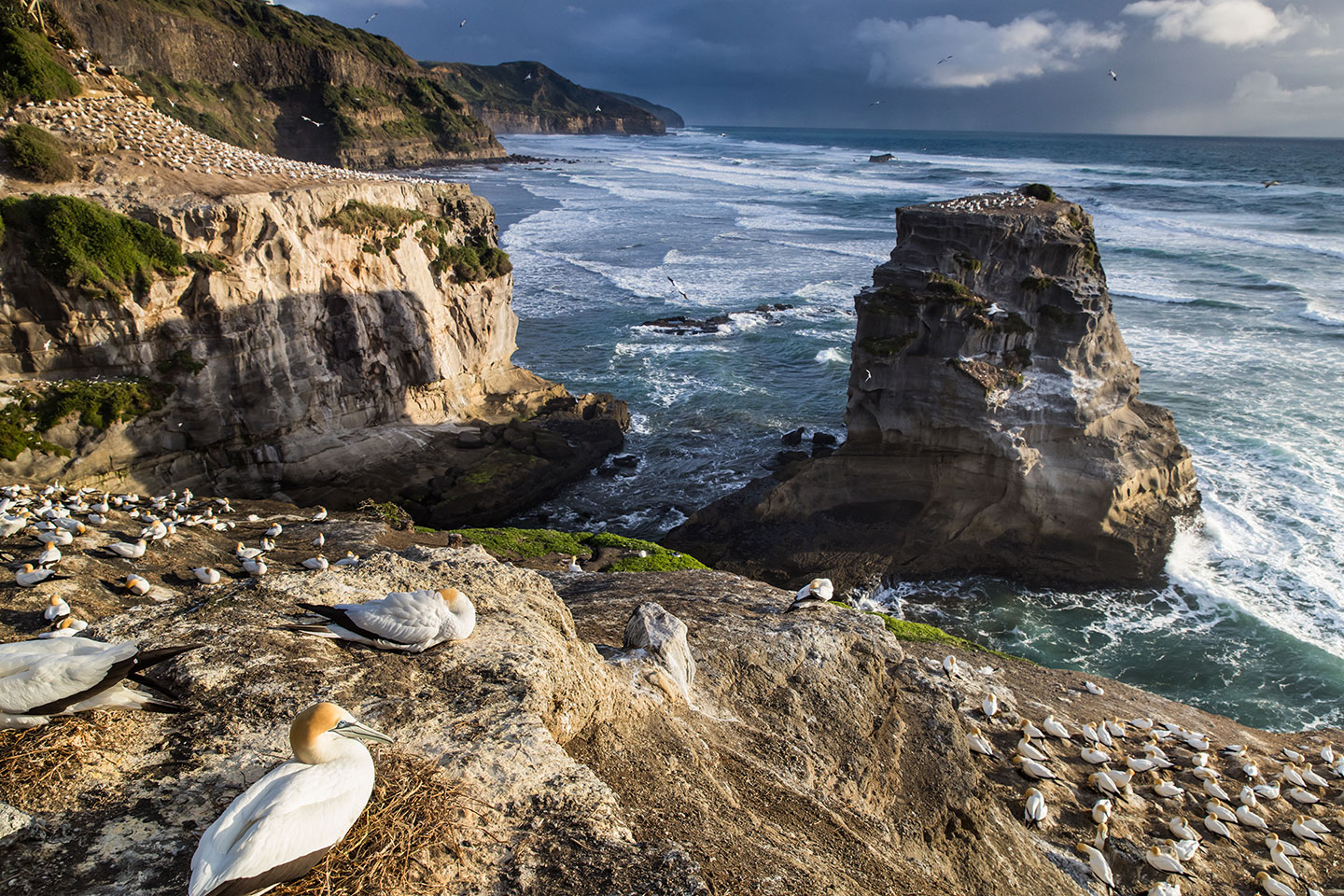
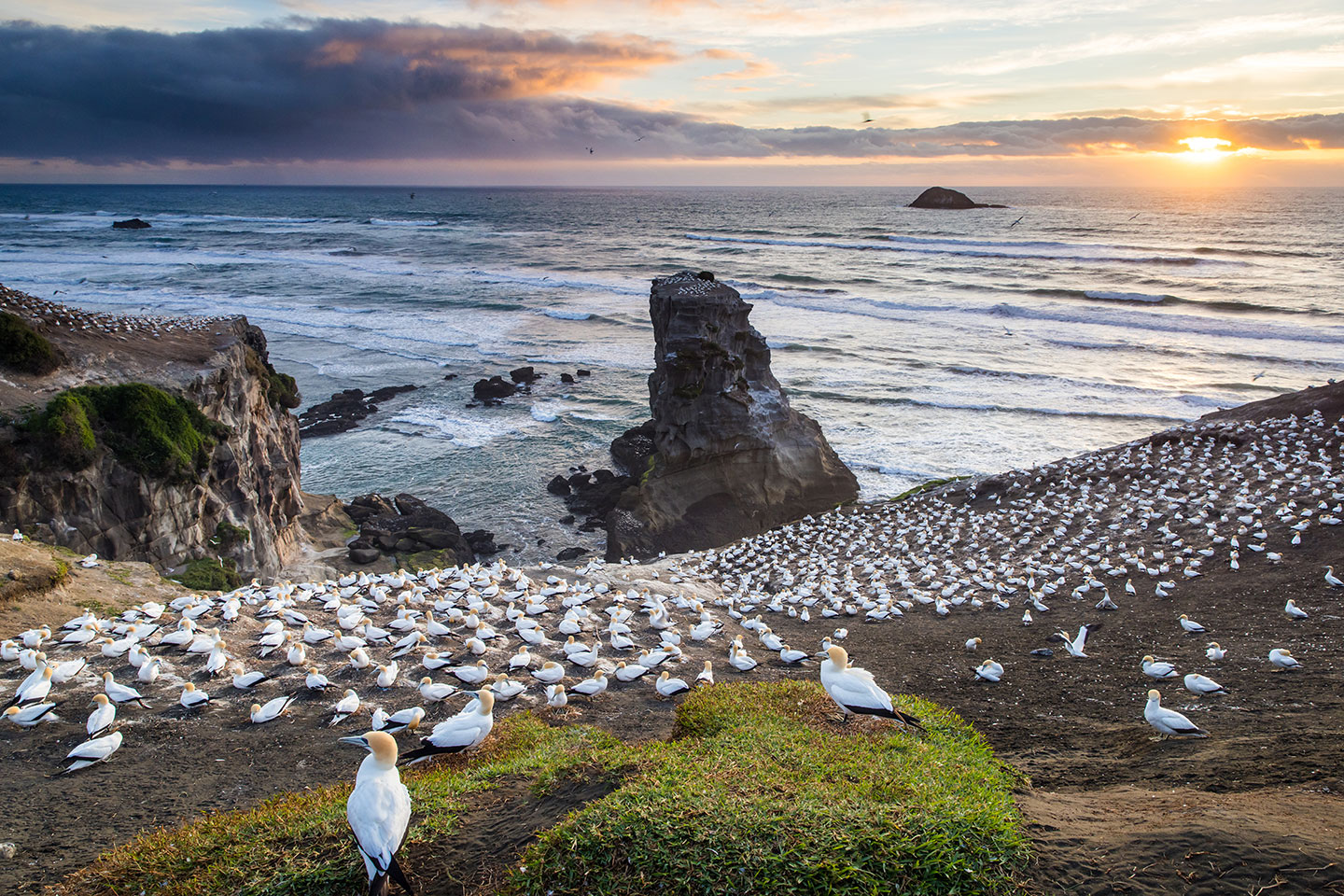
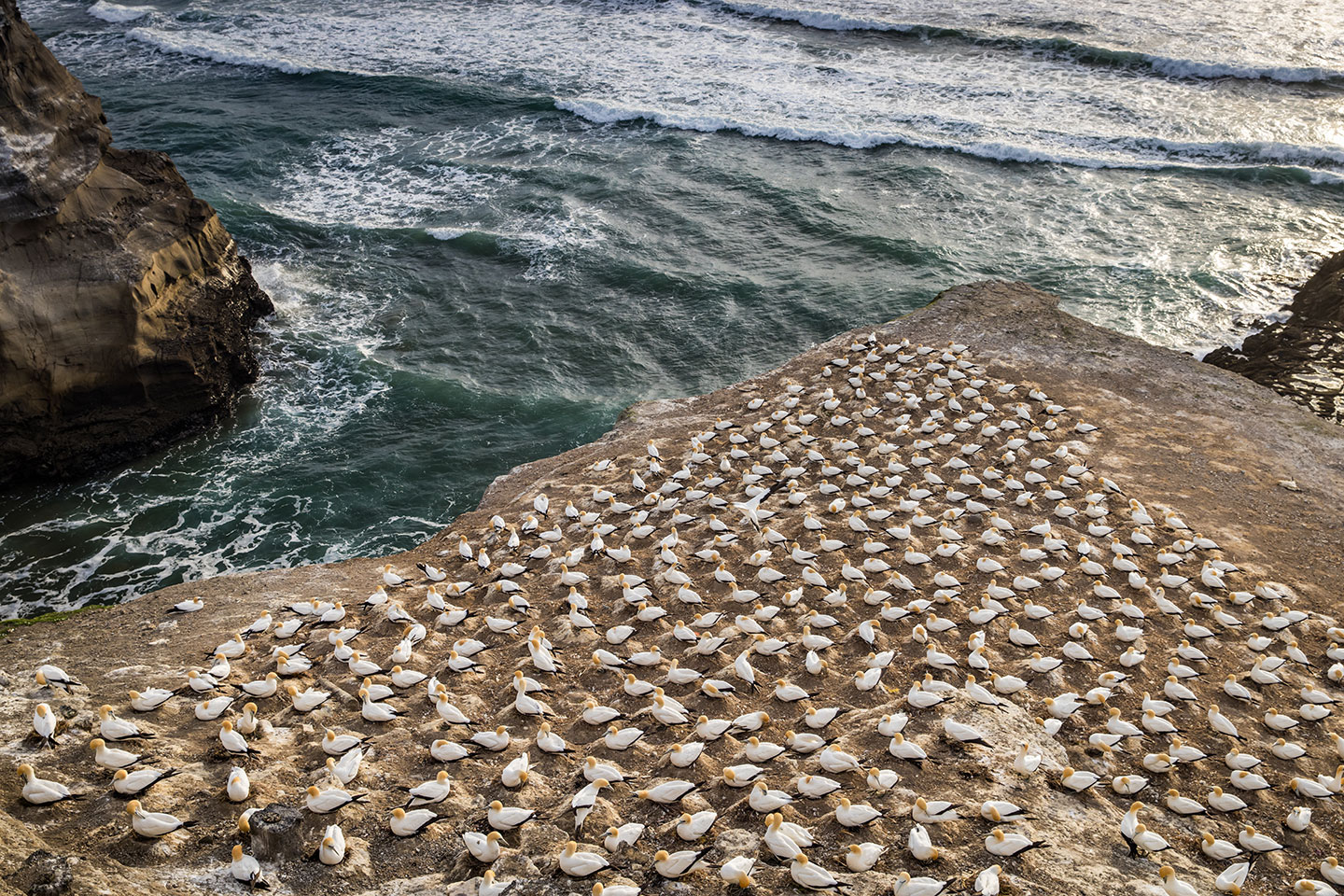
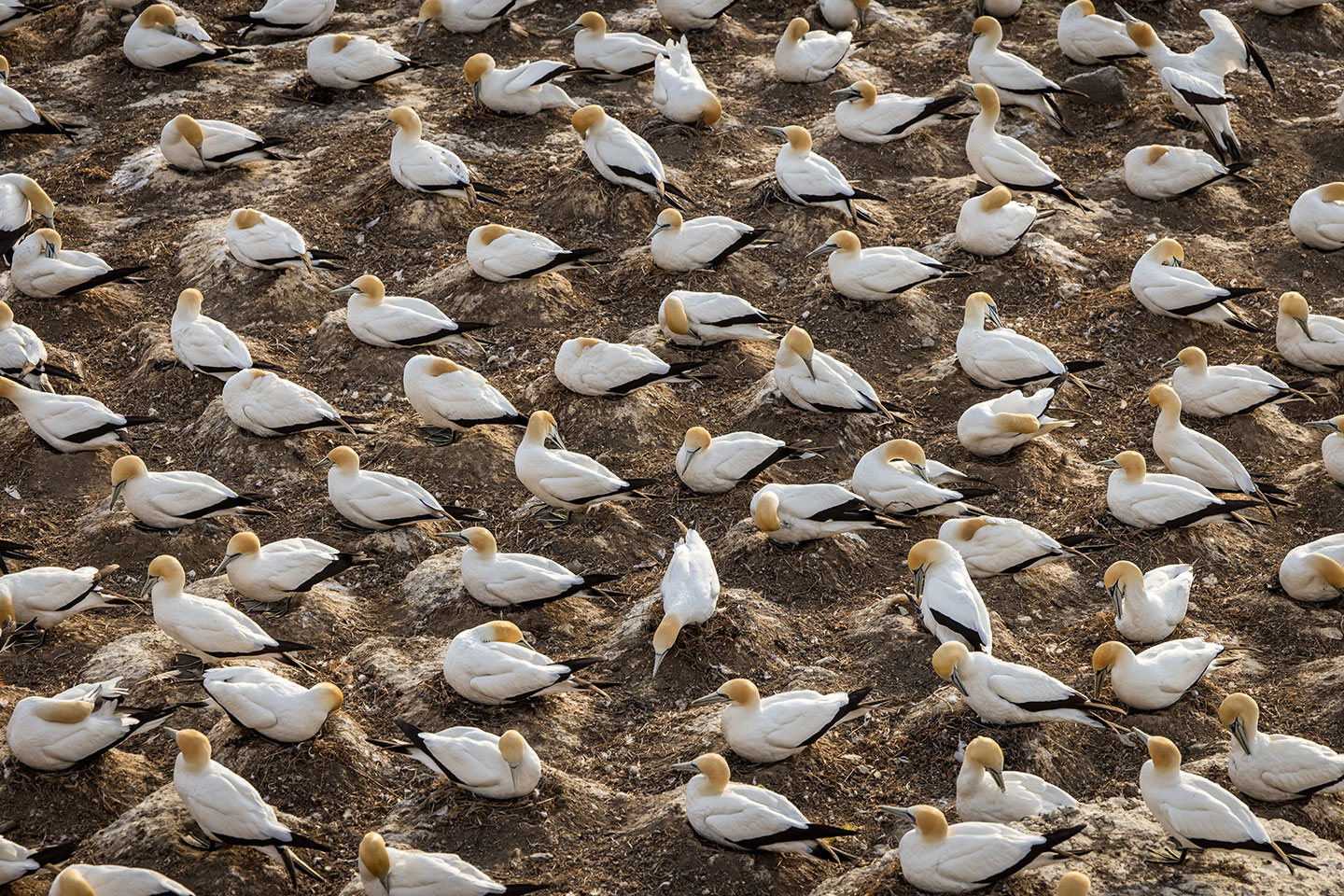
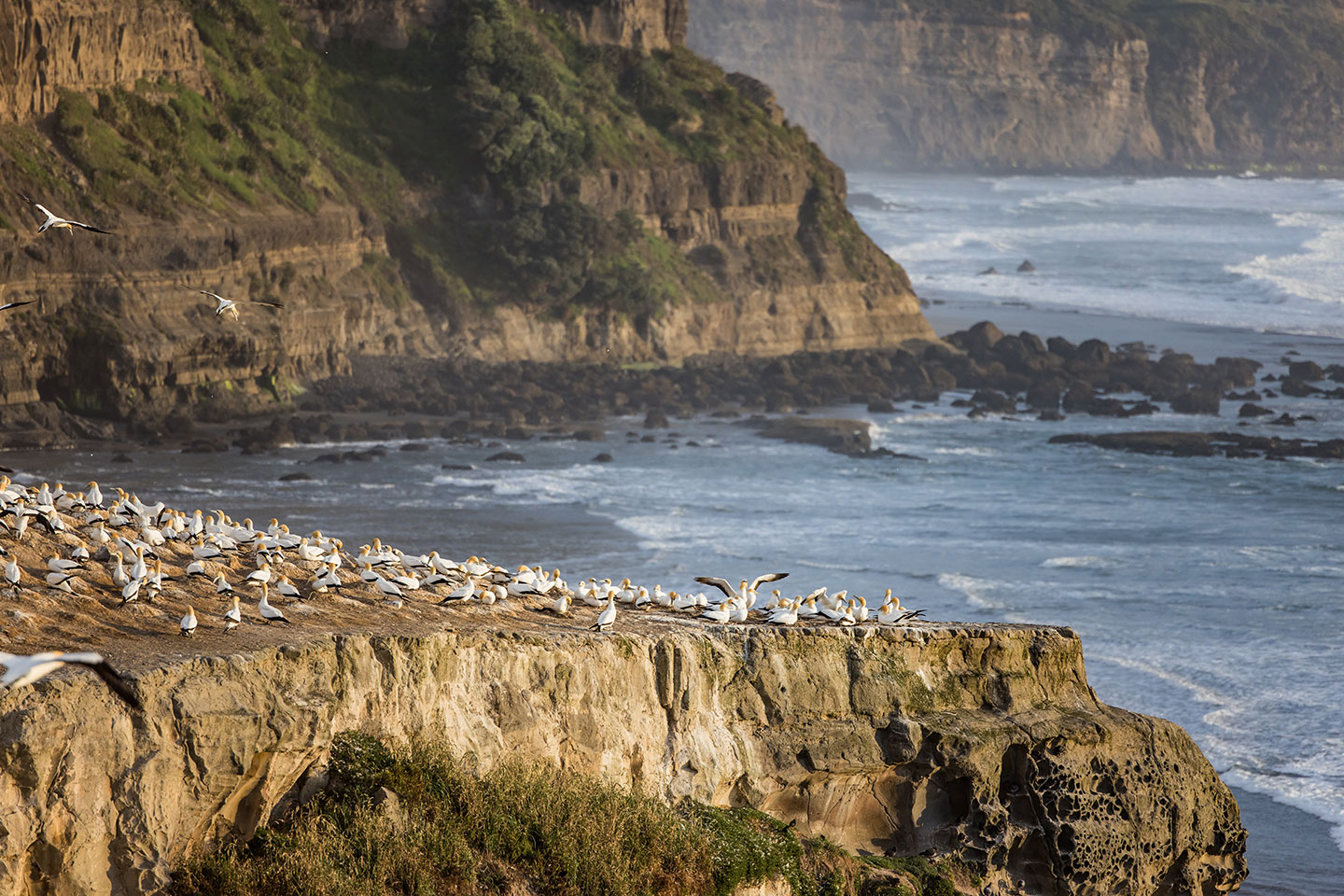
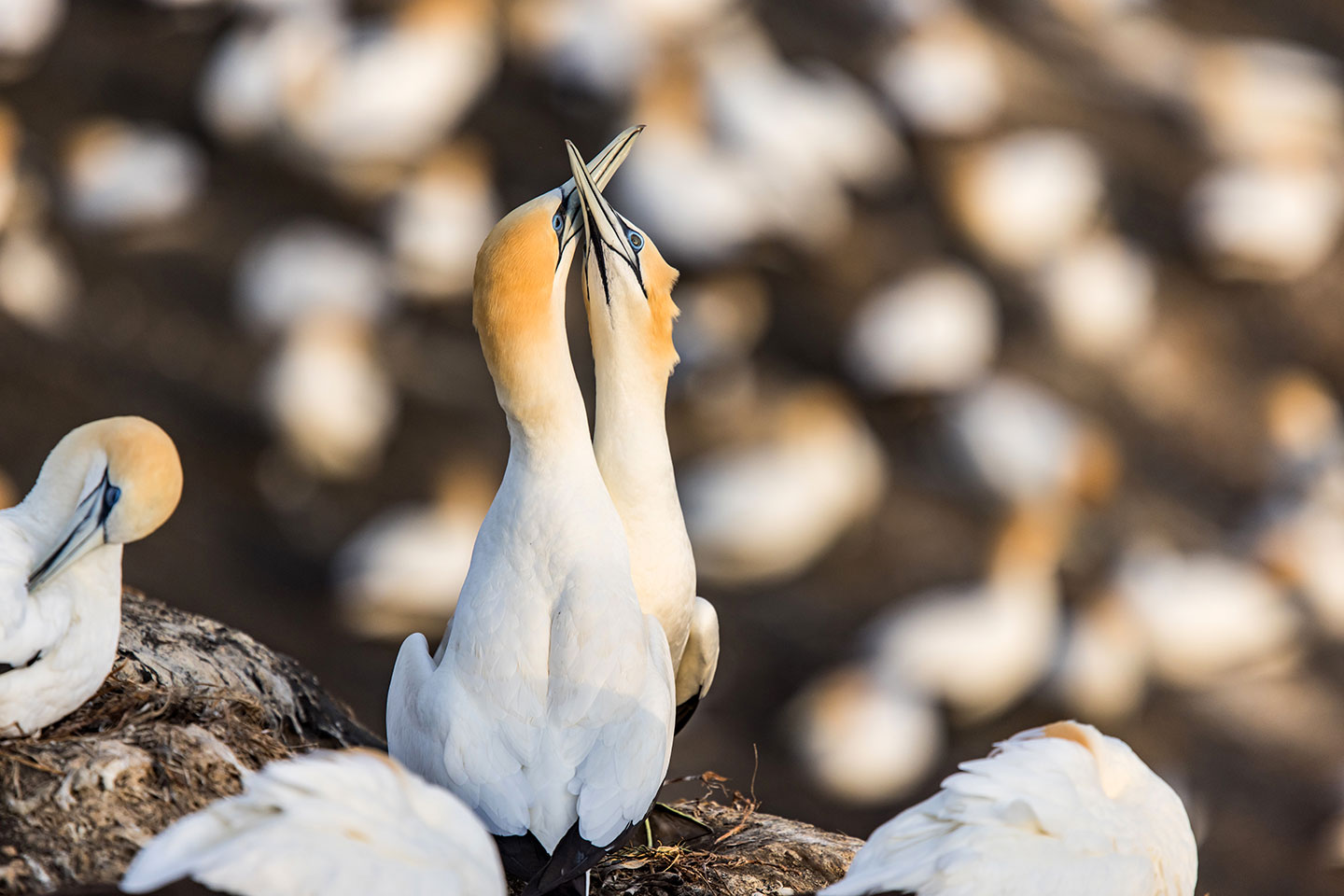
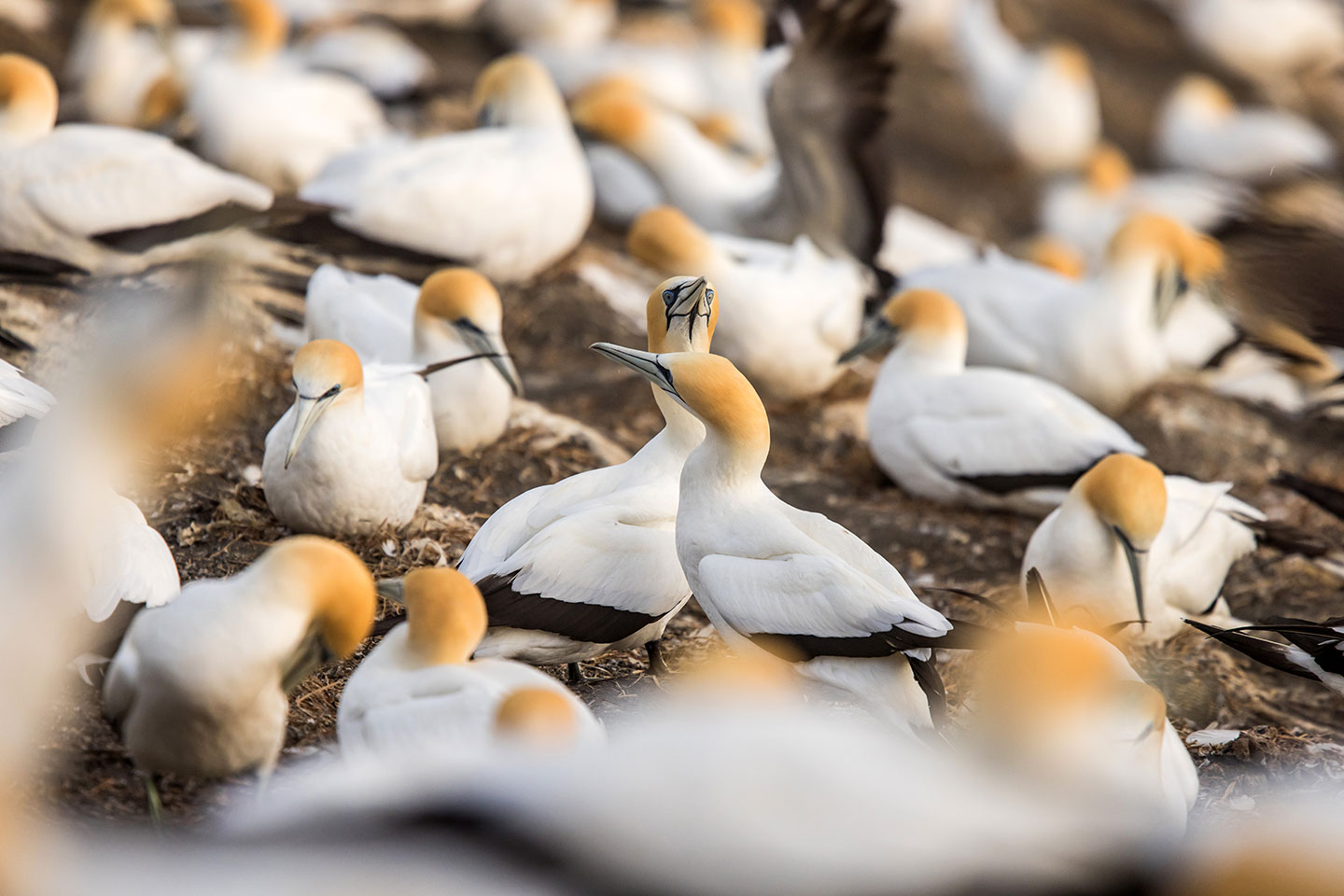
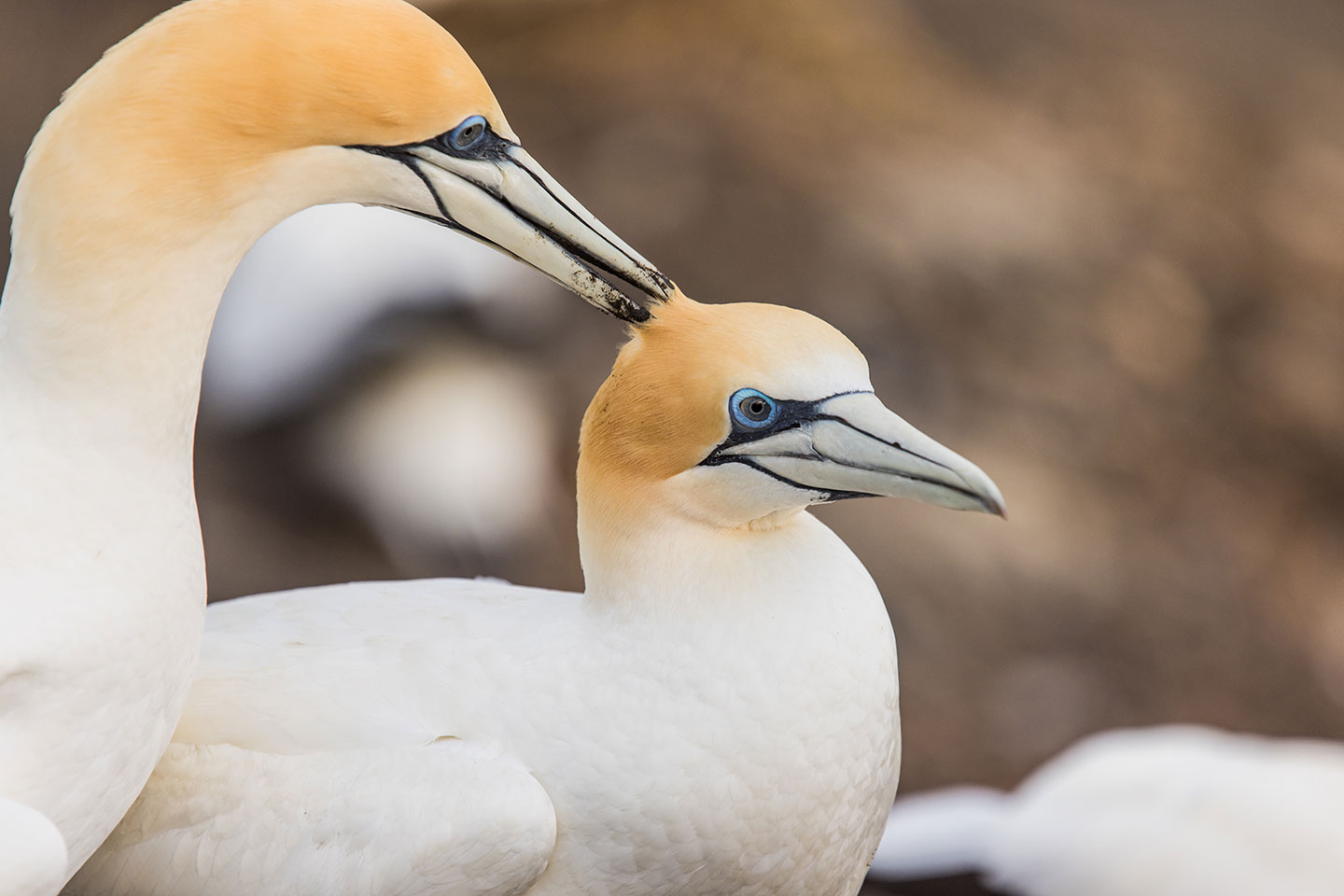
My first stop was the gannet colony that resides at the small coastal town of Muriwai. Here, every year between October and April, thousands of gannets come to nest on the cliffs. Once the eggs have hatched, the colony moves to Australia. Here at Muriwai, you can get very close to them, and the gannets don’t seem to mind you as they are very focused on protecting their nests. I went late in the day as the sun was setting and had the entire place to myself.
For an exact location where the photo was taken, you can save the photo or hover over it.
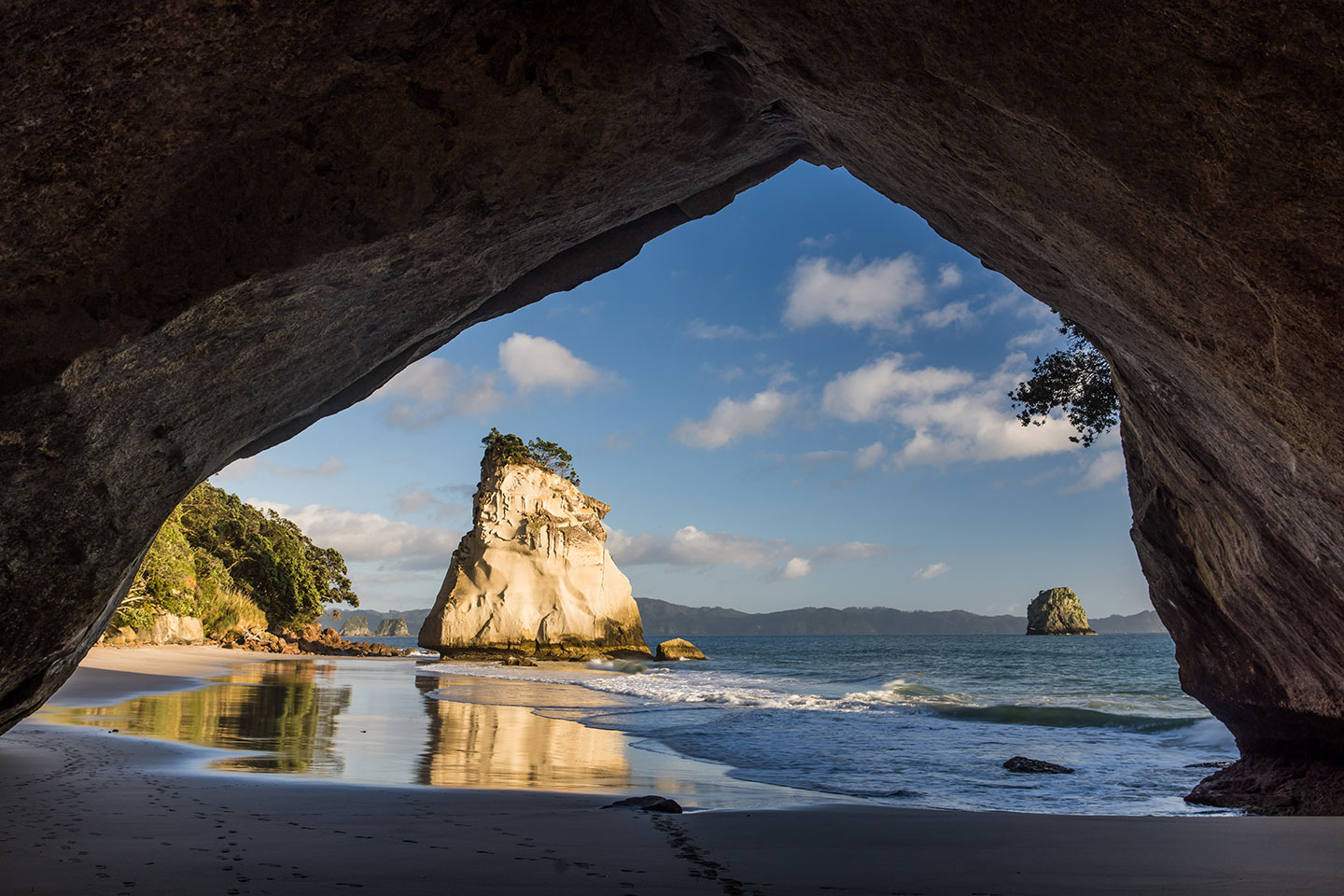
Cathedral Cove – Te Whanganui-A-Hei
On the other side of the North Island on the east coast lies Cathedral Cove, a main draw to the Coromandel peninsula. As soon as I left the gannet colony, the rain came in, which didn’t look promising for the following days. But, as the weather in New Zealand changes by the minute, the next day I woke up to a blue sky. I hiked down an easy path through a beautiful fern forest to arrive at the beach. From here, you get stunning coastal views and if you plan your trip well, you can walk through the cove at low tide. The mornings are best for beautiful reflections on the shallow waters.
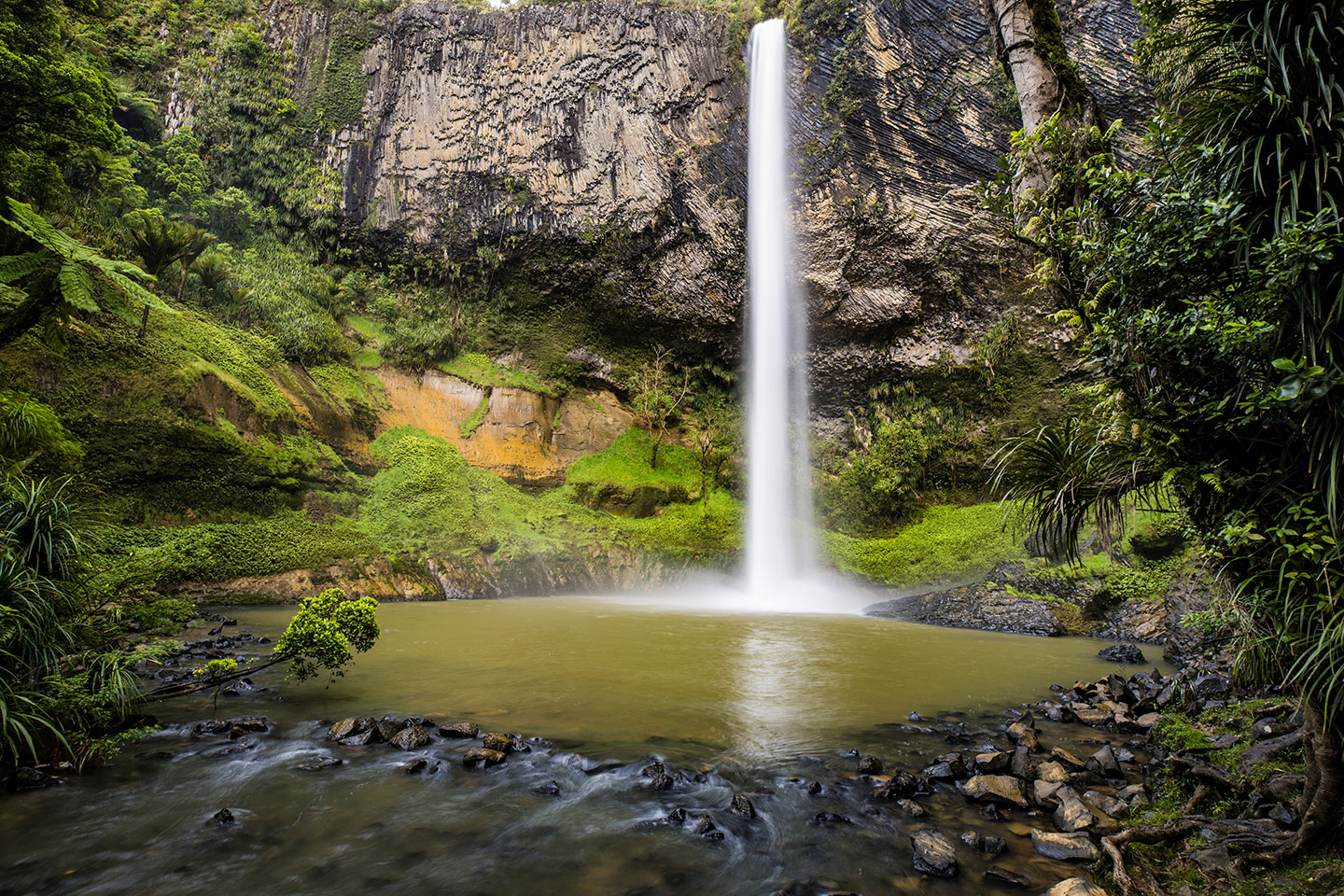
Bridal Veil falls – Wharēinga Falls
A bit out of the way for most travelers, but worth a stop, are the Bridal Veil falls. With a plunge of 55 meters, these falls are beautiful and impressive. There are several viewing platforms from different levels and the hike through the native rainforest is worth the trip alone.
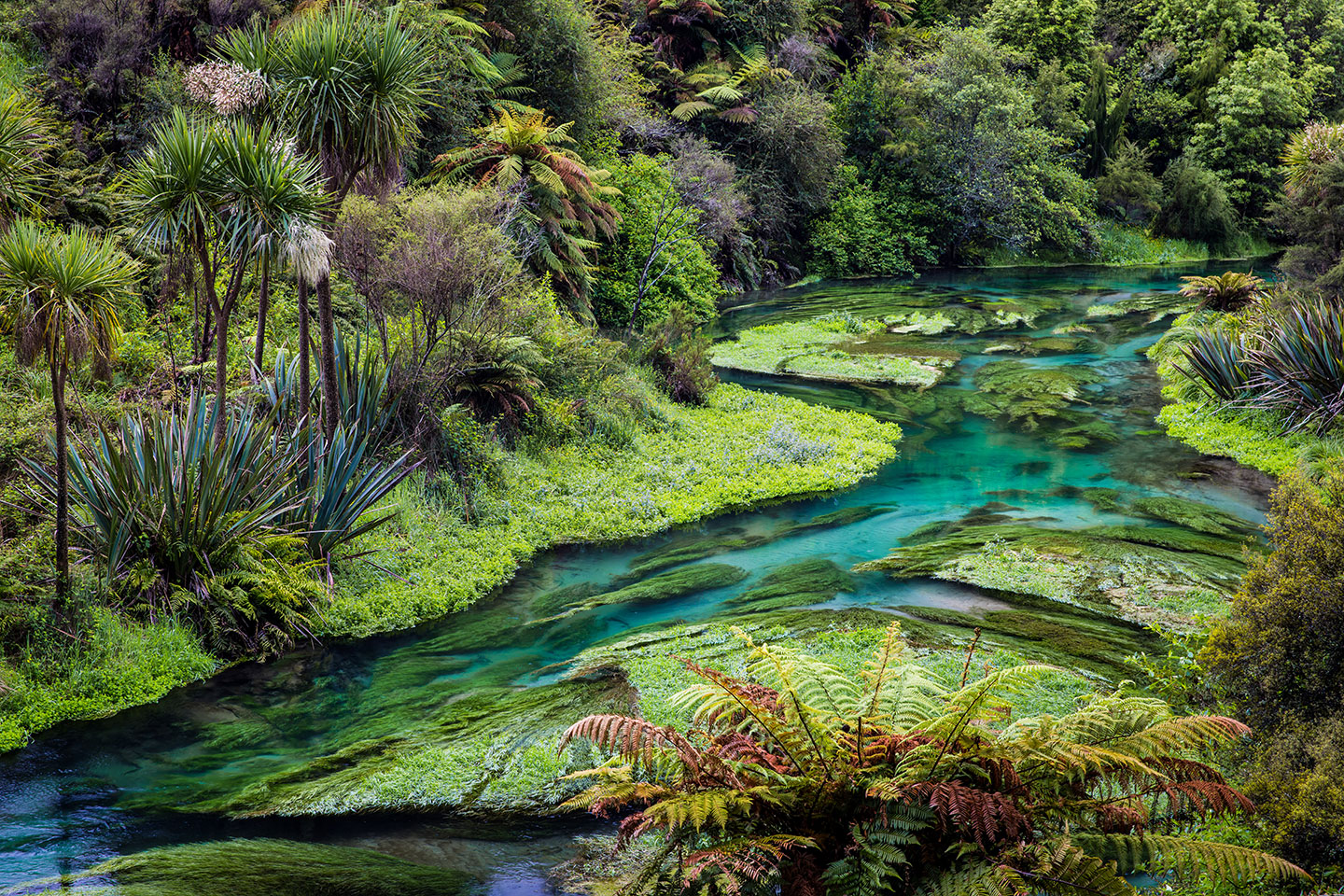
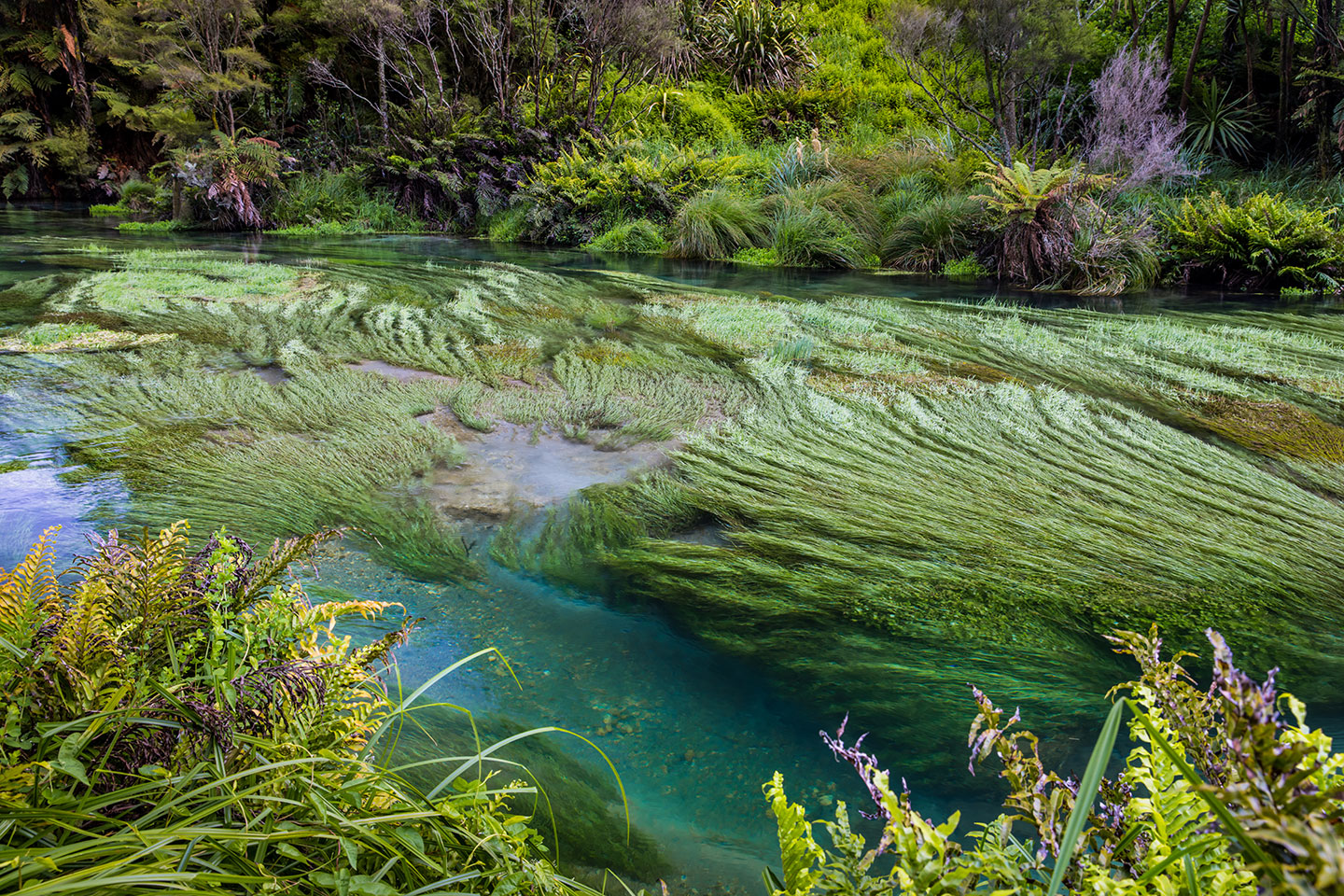
Te Waihou springs
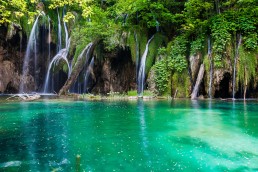
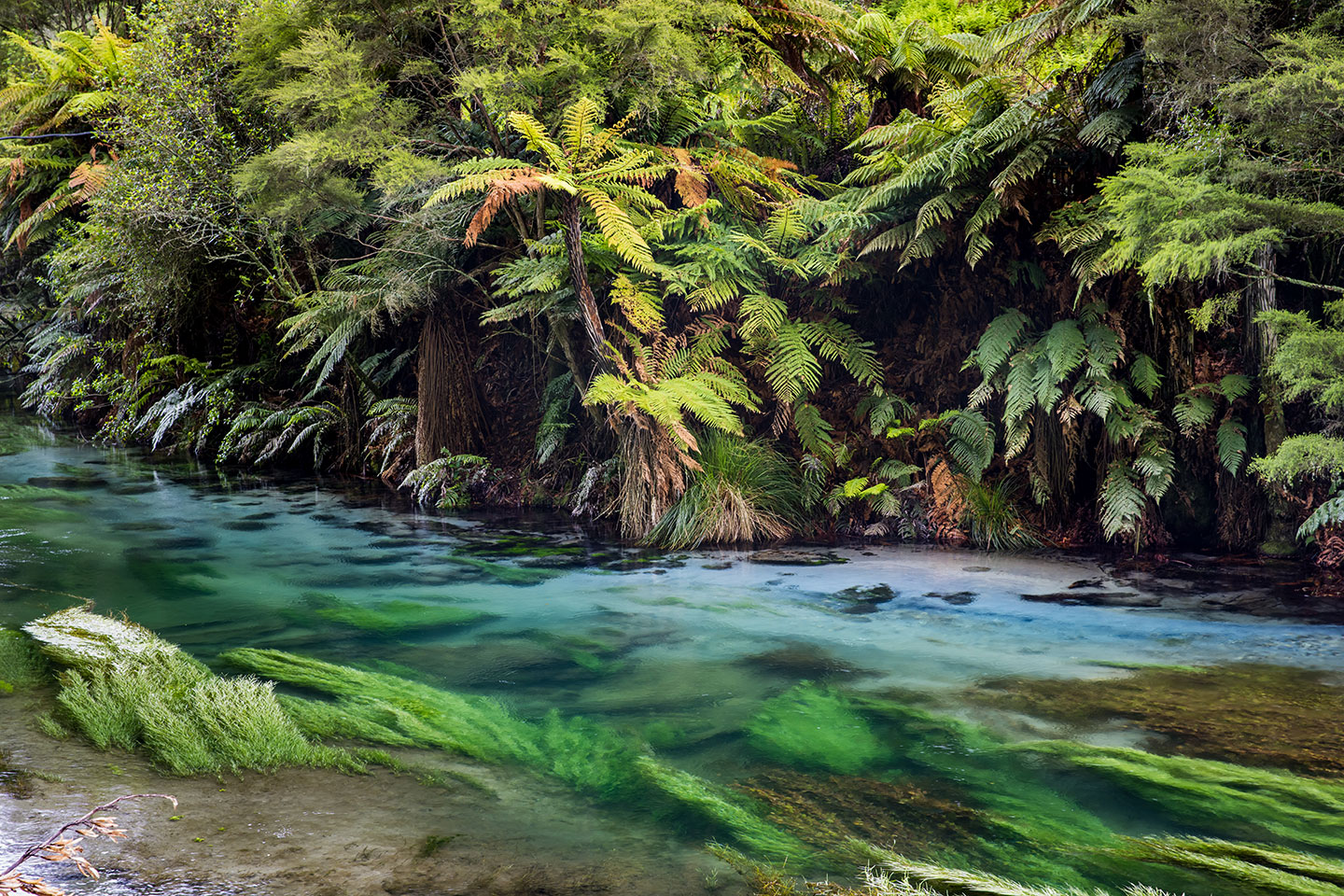
Further inland, the Te Waihu springs have got to be some of the most beautiful spring waters I have ever seen. The pure water absorbs red light, leaving only blue and green colors visible. The path along these springs is very lush and it makes for a nice stop on the way over to Rotorua if you’re coming from the north.
Rotorua
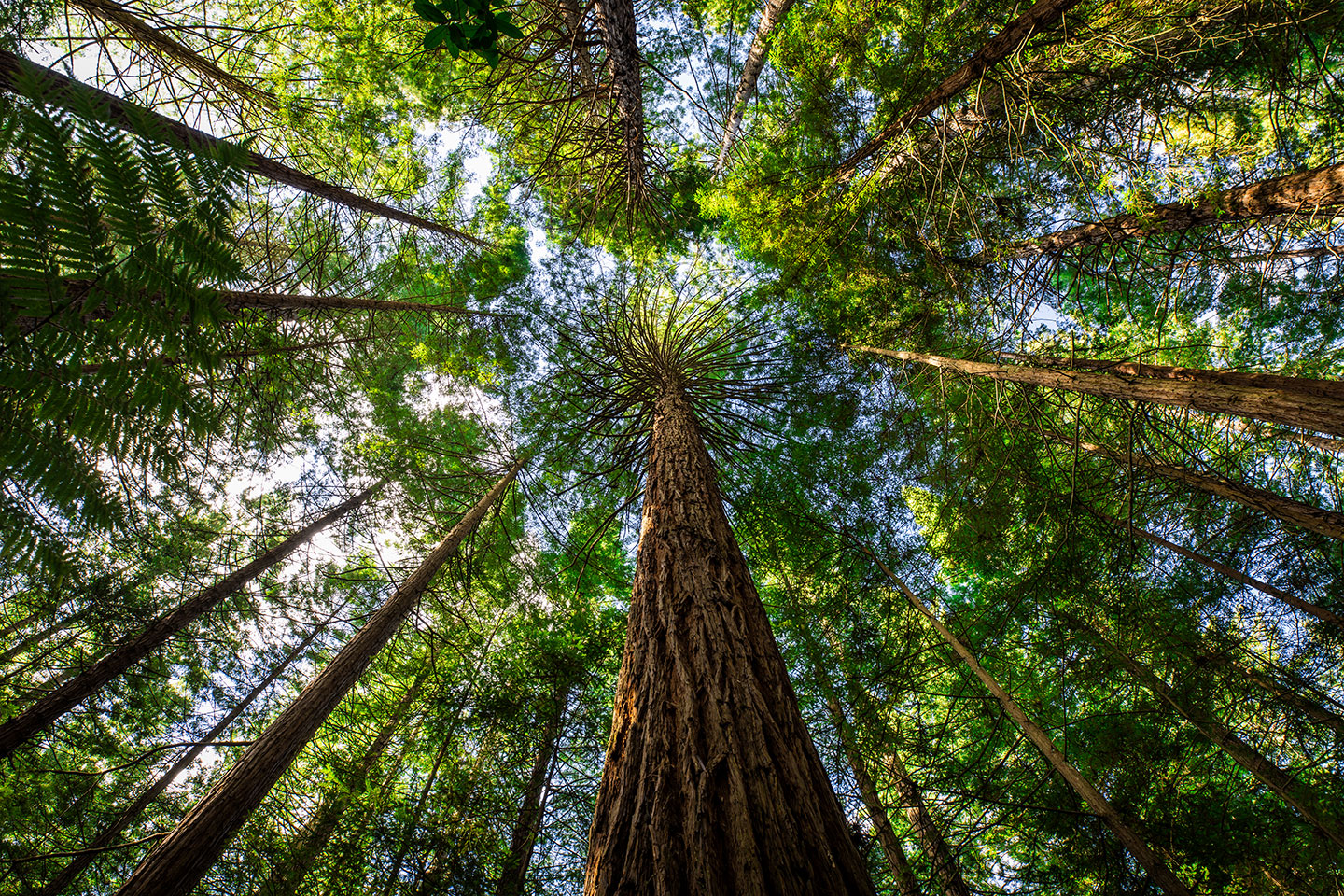
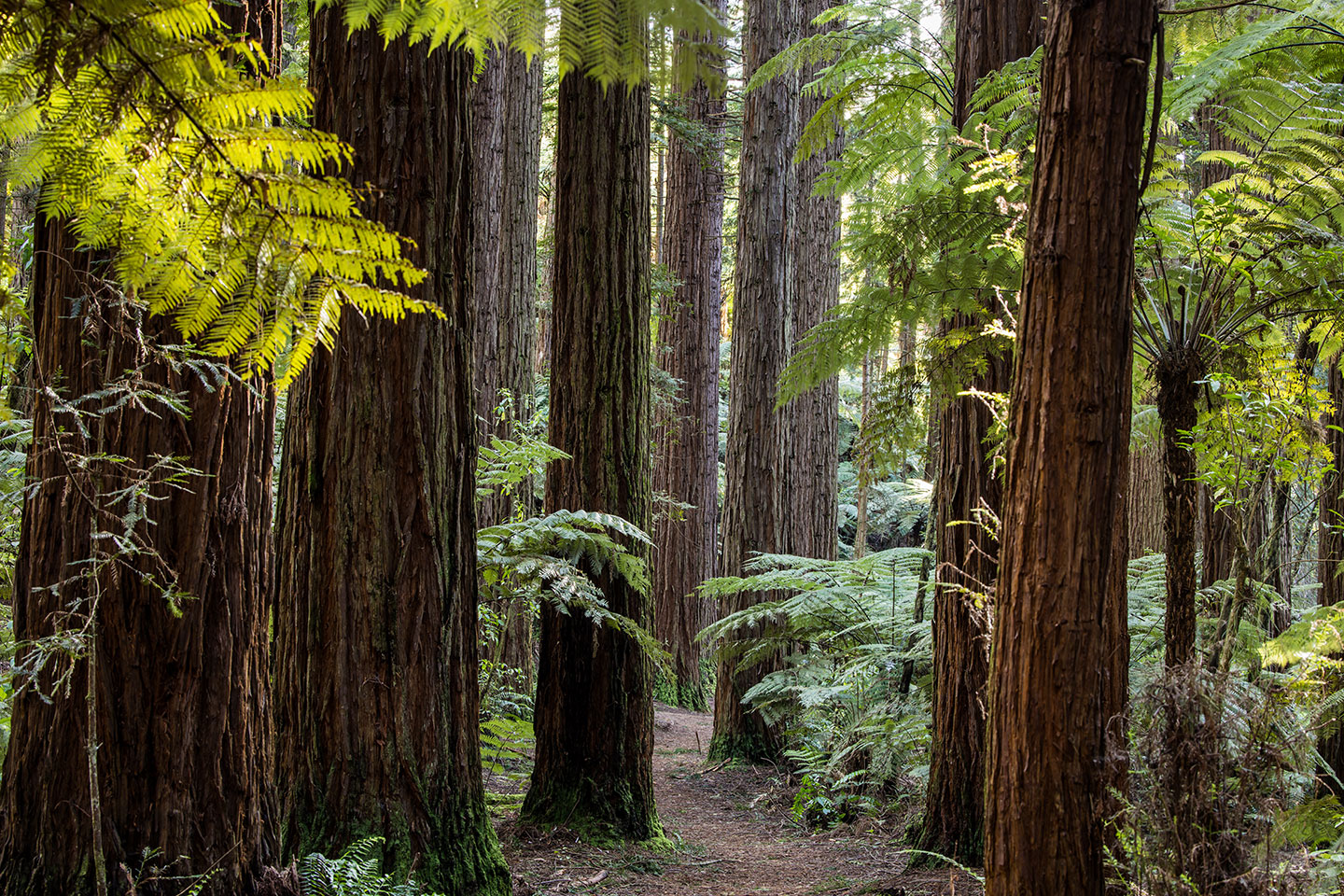
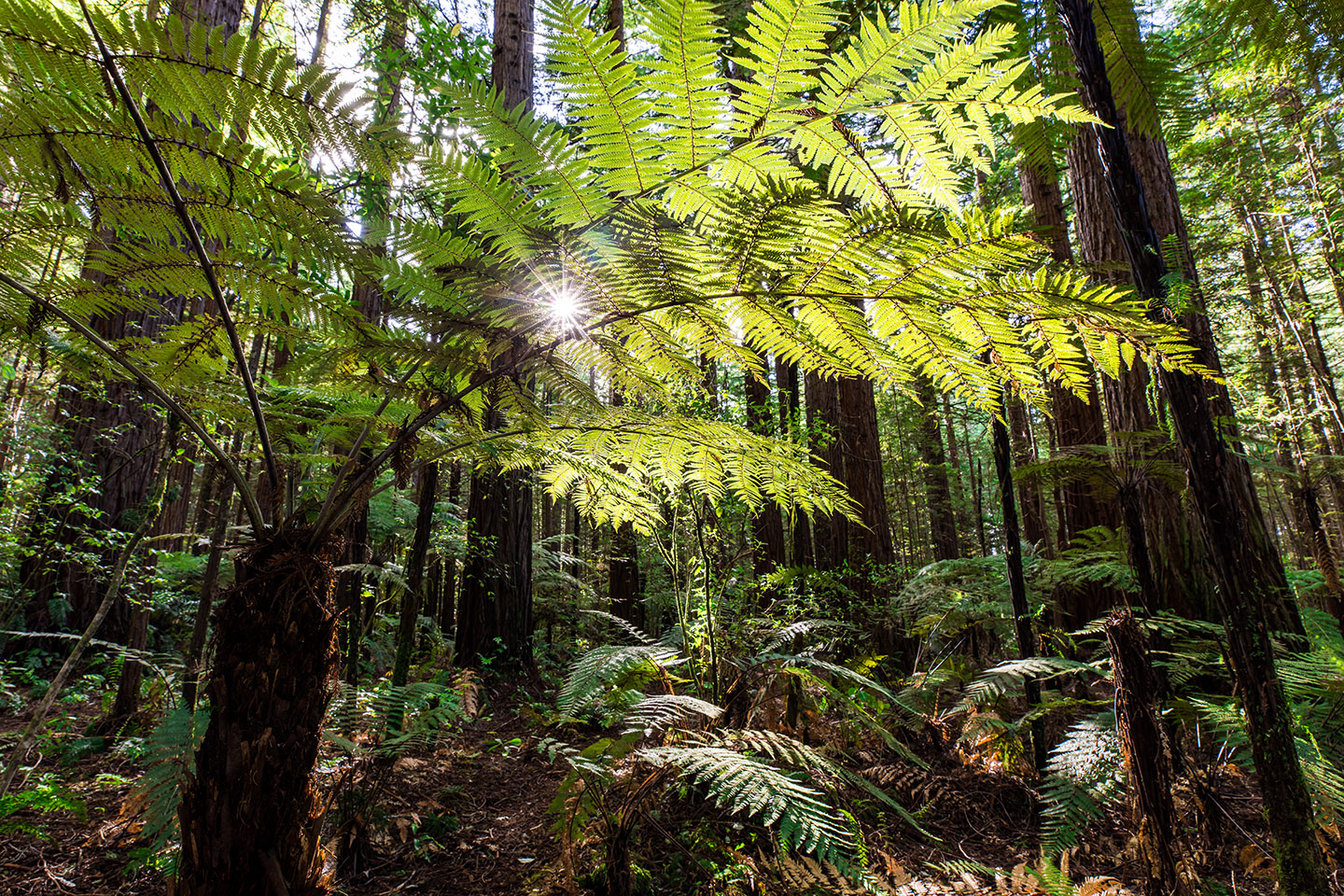
Around the tourist hub of Rotorua, there are several great places to visit. While the town itself is nothing to rave about, the surrounding nature is beautiful. Just outside the town, you can walk through a giant redwood tree forest called the Whakarewarewa forest. Some trees here are up to 70 meters tall and over 100 years old. If you go late in the afternoon, the tour groups have left and you get to explore this forest all by yourself. At this hour, the light pierces through the trees, causing beautiful shadows.
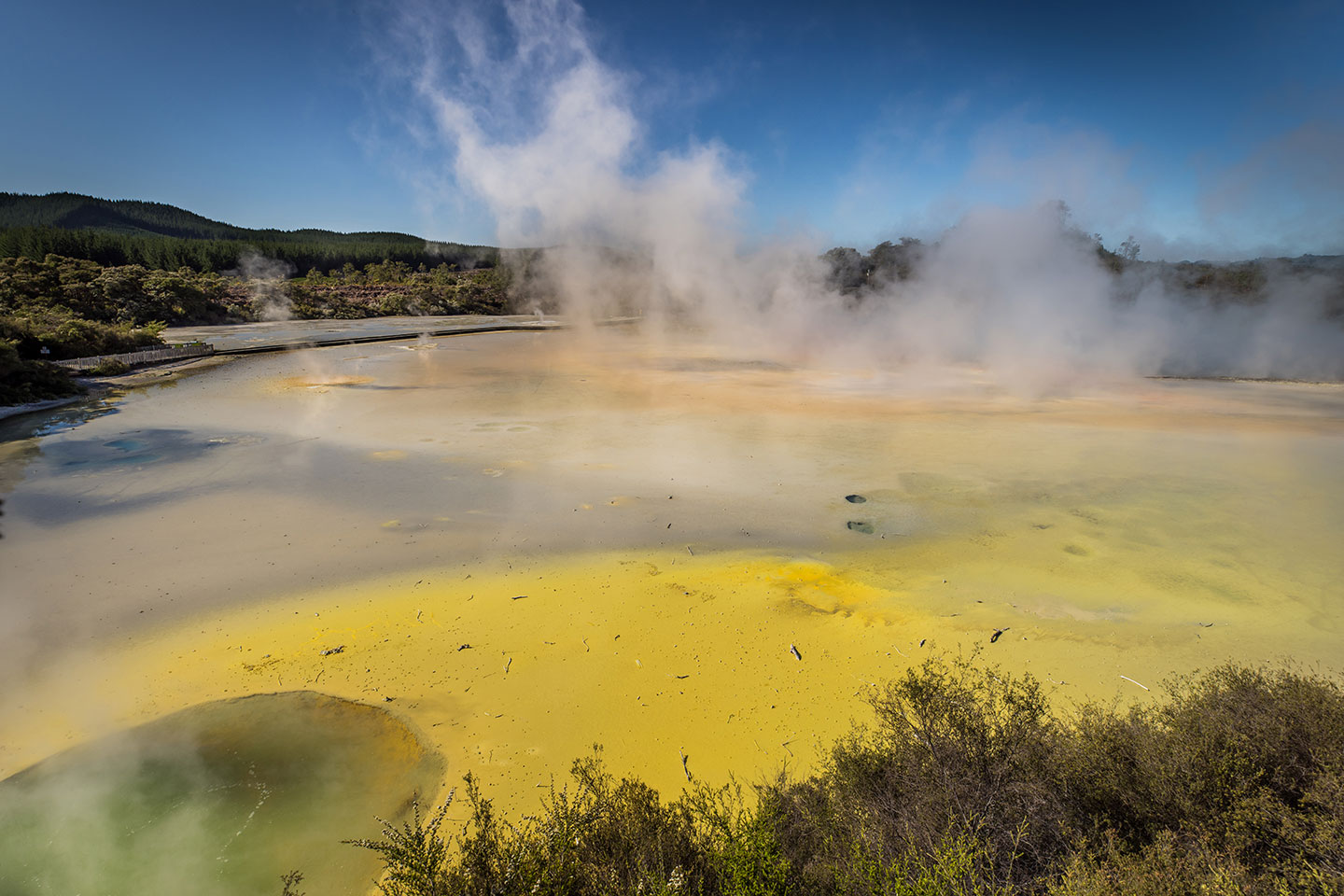
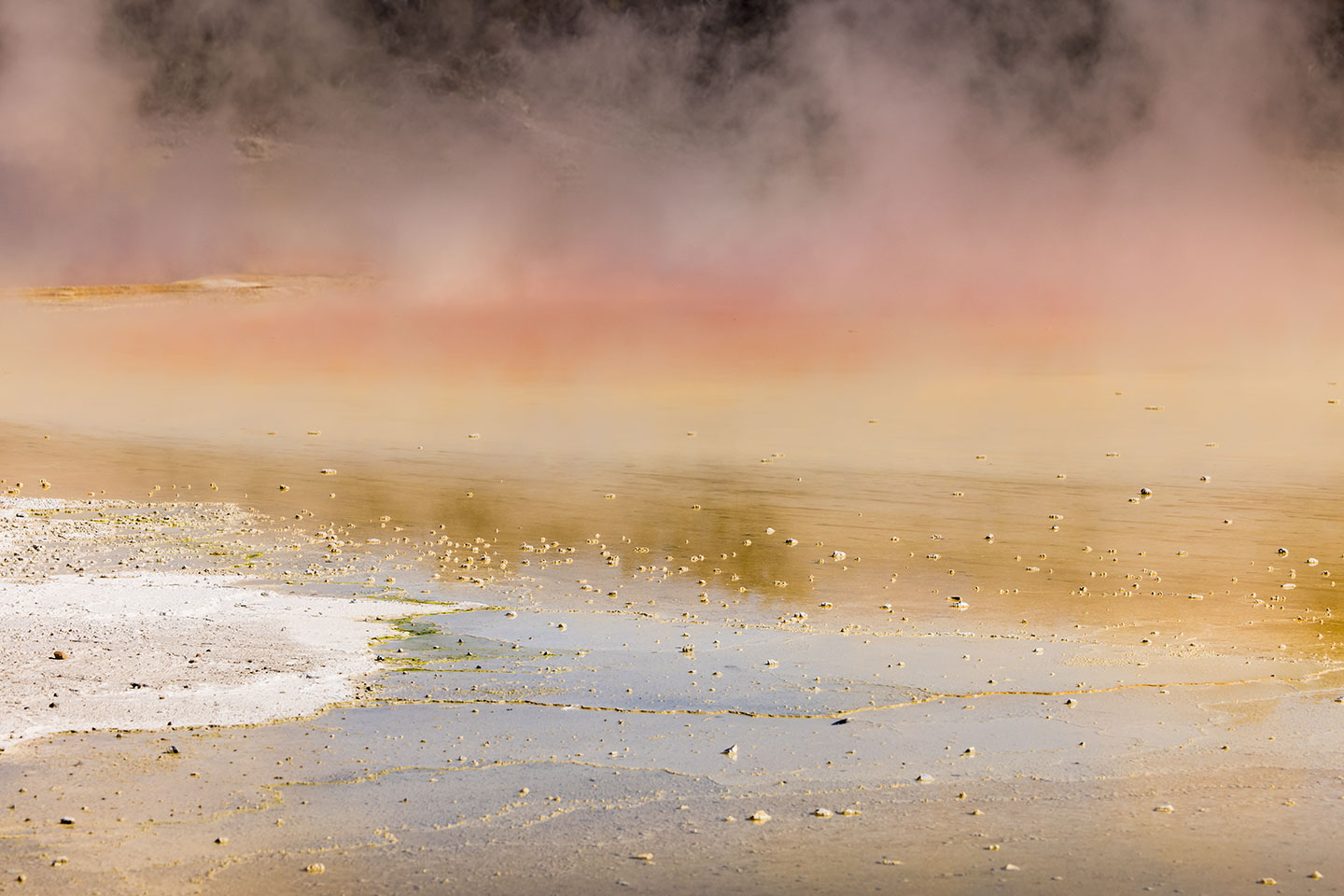
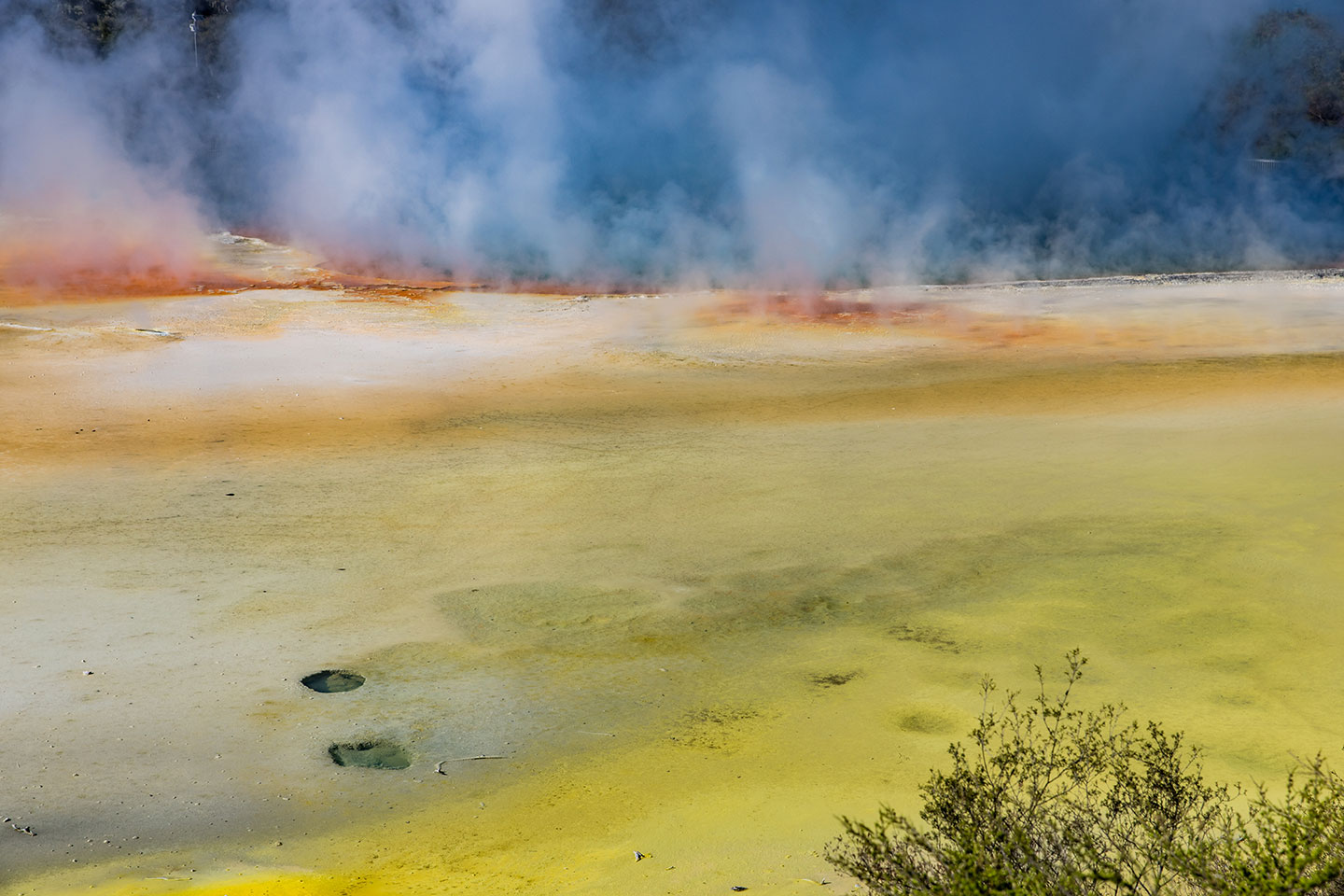
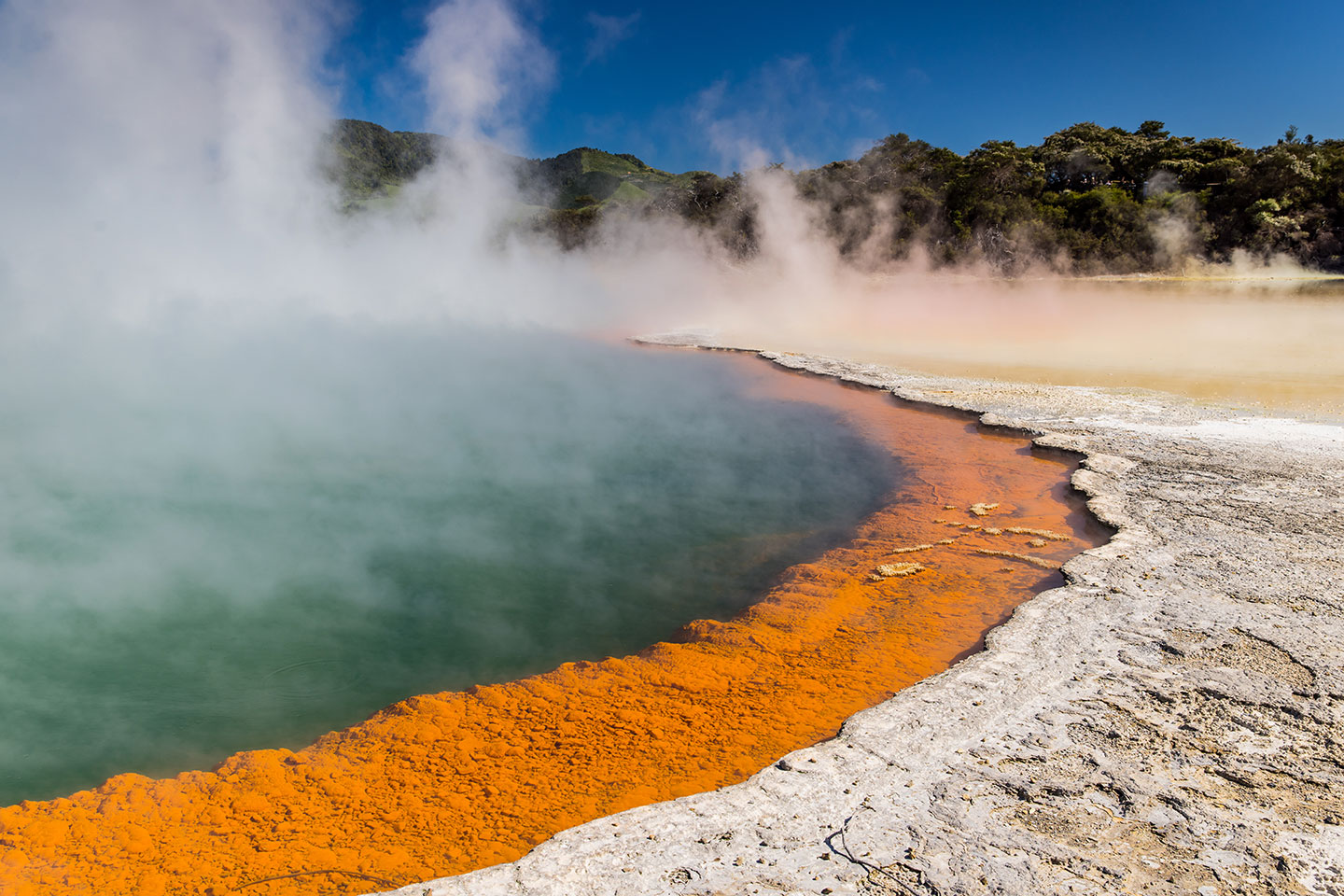
A bit south of Rotorua, the landscape changes dramatically. Located in the Taupō Volcanic Zone, one of the most active volcanic areas in the world, you can find many geothermal fields. I spent the morning at Wai-O-Tapu, where you can appreciate the array of colorful hot thermal pools. It’s always fascinating to see how the earth is so active, and it reminded me of the geothermal fields in Iceland.
Tongariro Alpine Crossing
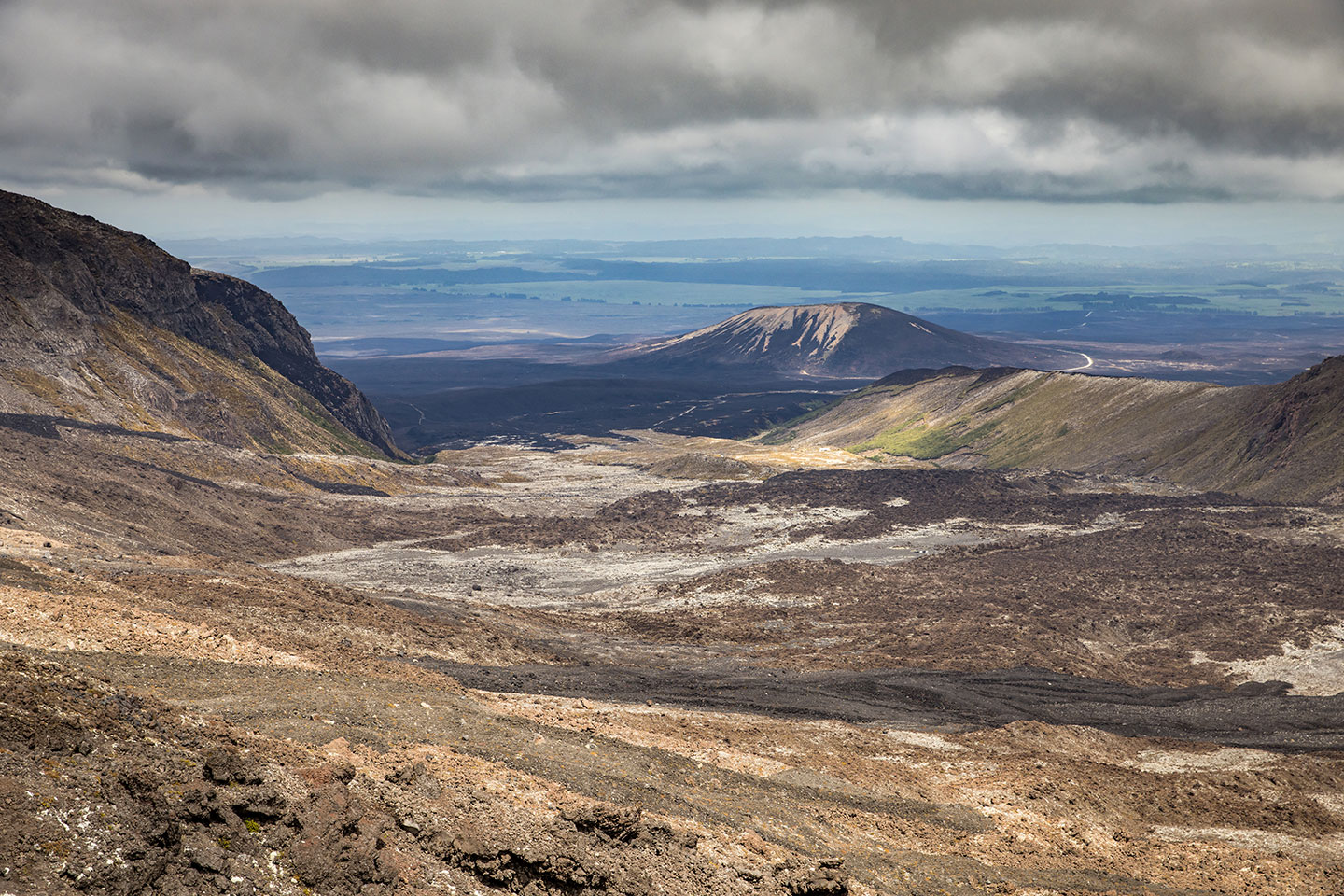
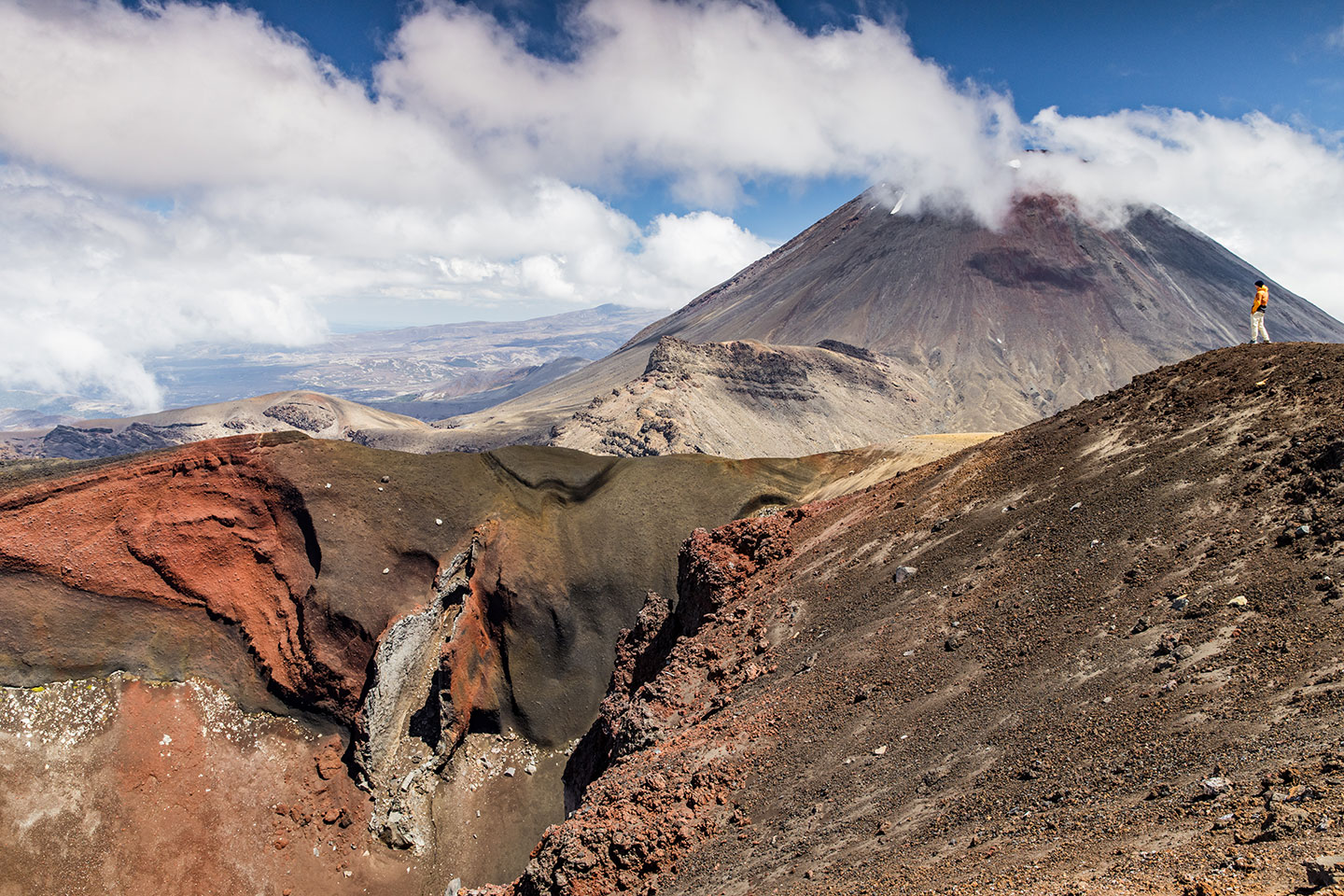
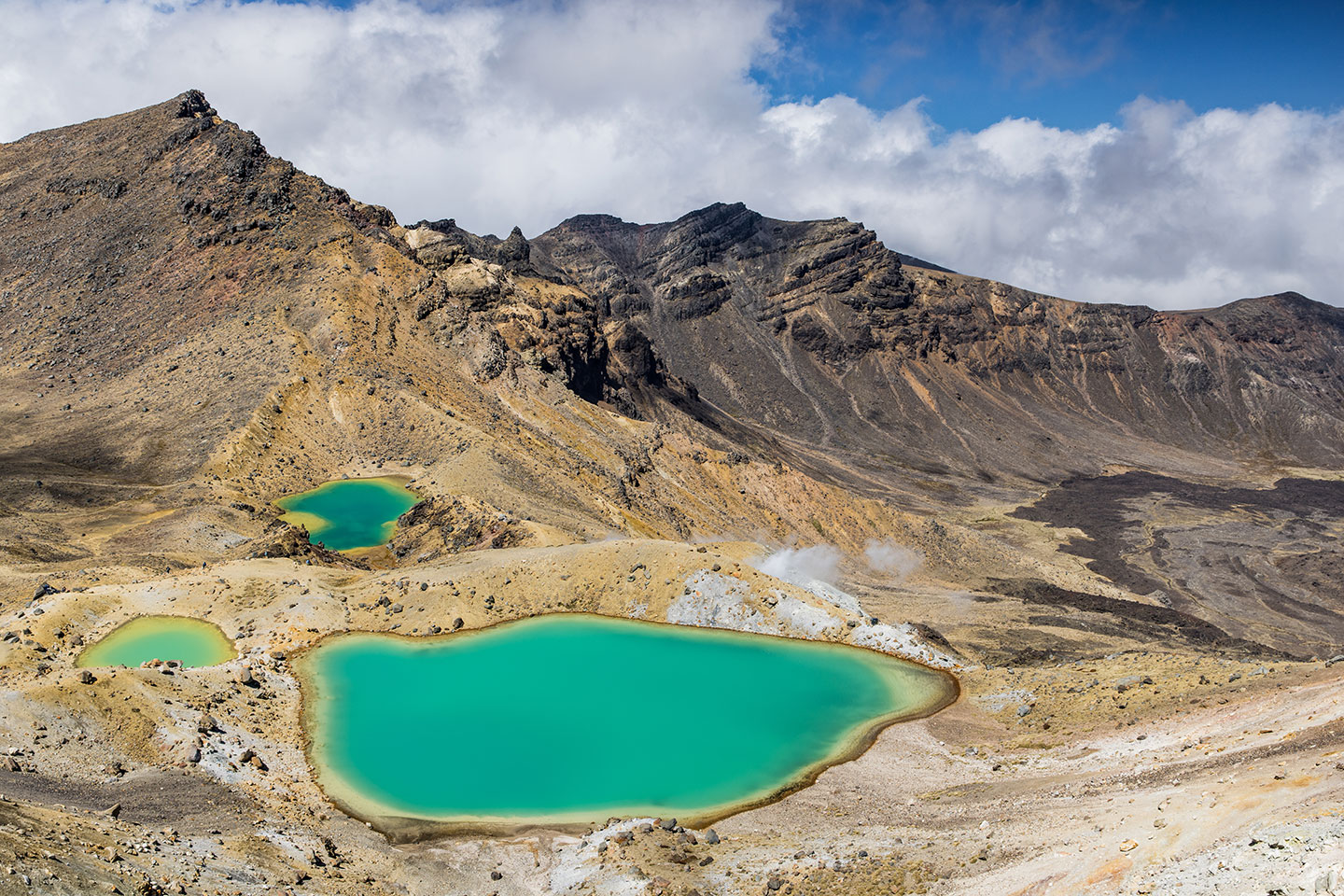
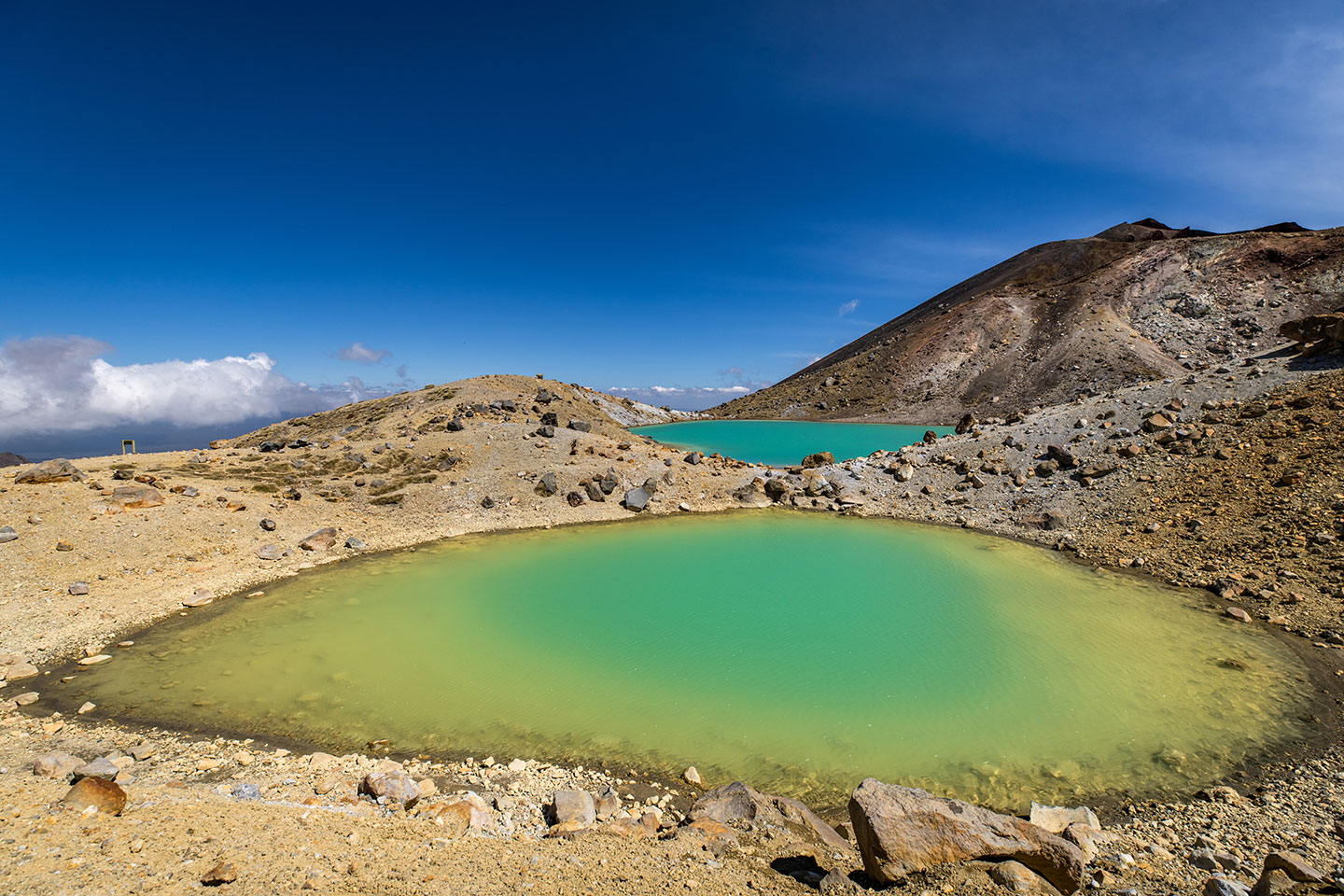
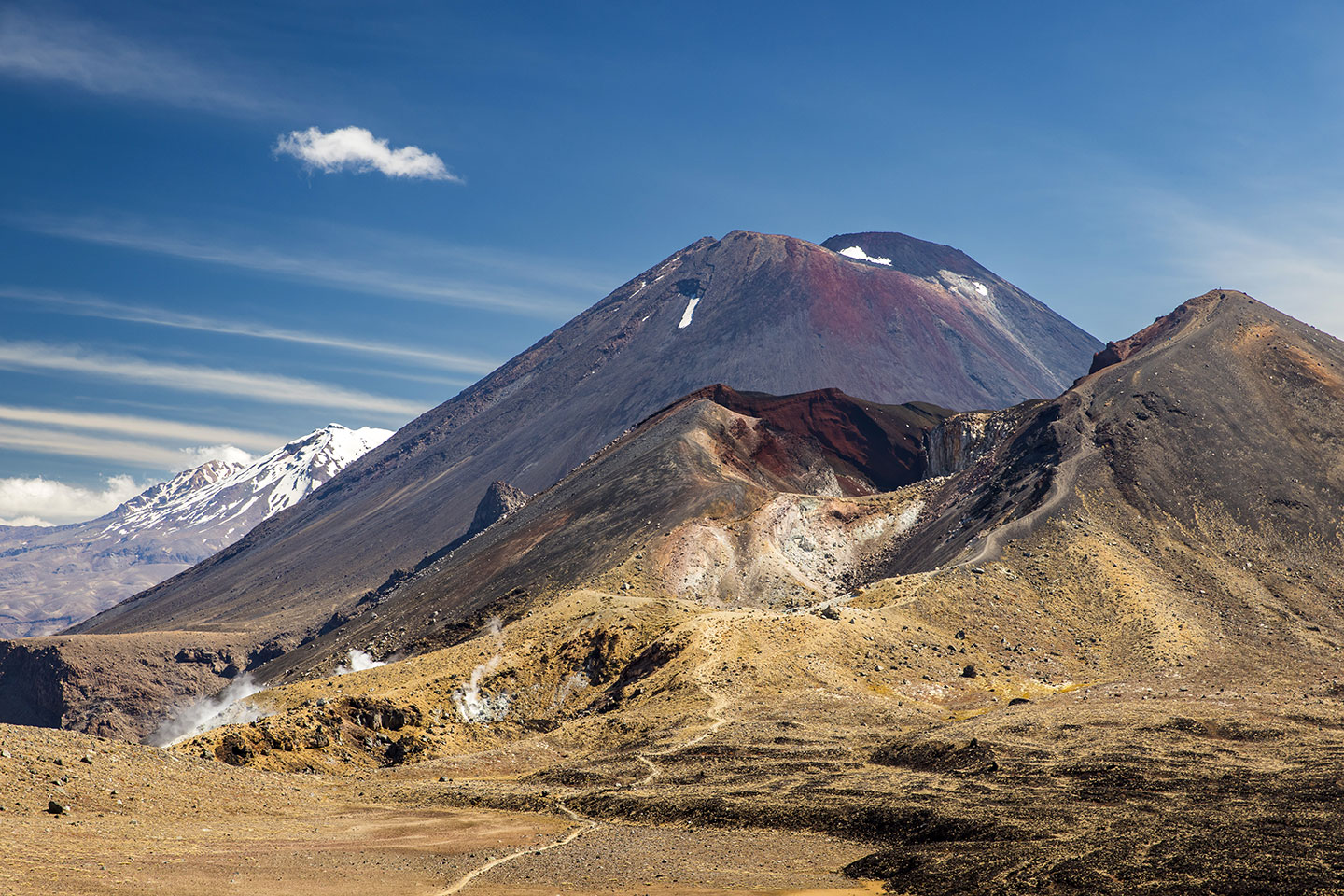
The Tongariro Alpine crossing is often described as the best day hike in all of New Zealand, and for good reason. The impressive views throughout combined with a challenging trek make it a popular hike. I set off to walk the strenuous 20km on a clear day and could already see the volcanoes from far away. As I approached the peak, clouds came rolling in, hiding the volcanoes to my disappointment. Knowing how quick the weather in New Zealand changes, I decided to wait around hoping it would clear up. Sure enough, not too long after, Ruahepu volcano and the red crater became visible! What a spectacular sight! The saturated emerald lakes nearby glistened in the sunlight and added to an otherwise dry terrain. After 35.000 steps (who’s counting?), I made it back to my car, exhausted, but thrilled.
Tongaporutu sea stacks and the Forgotten World Highway
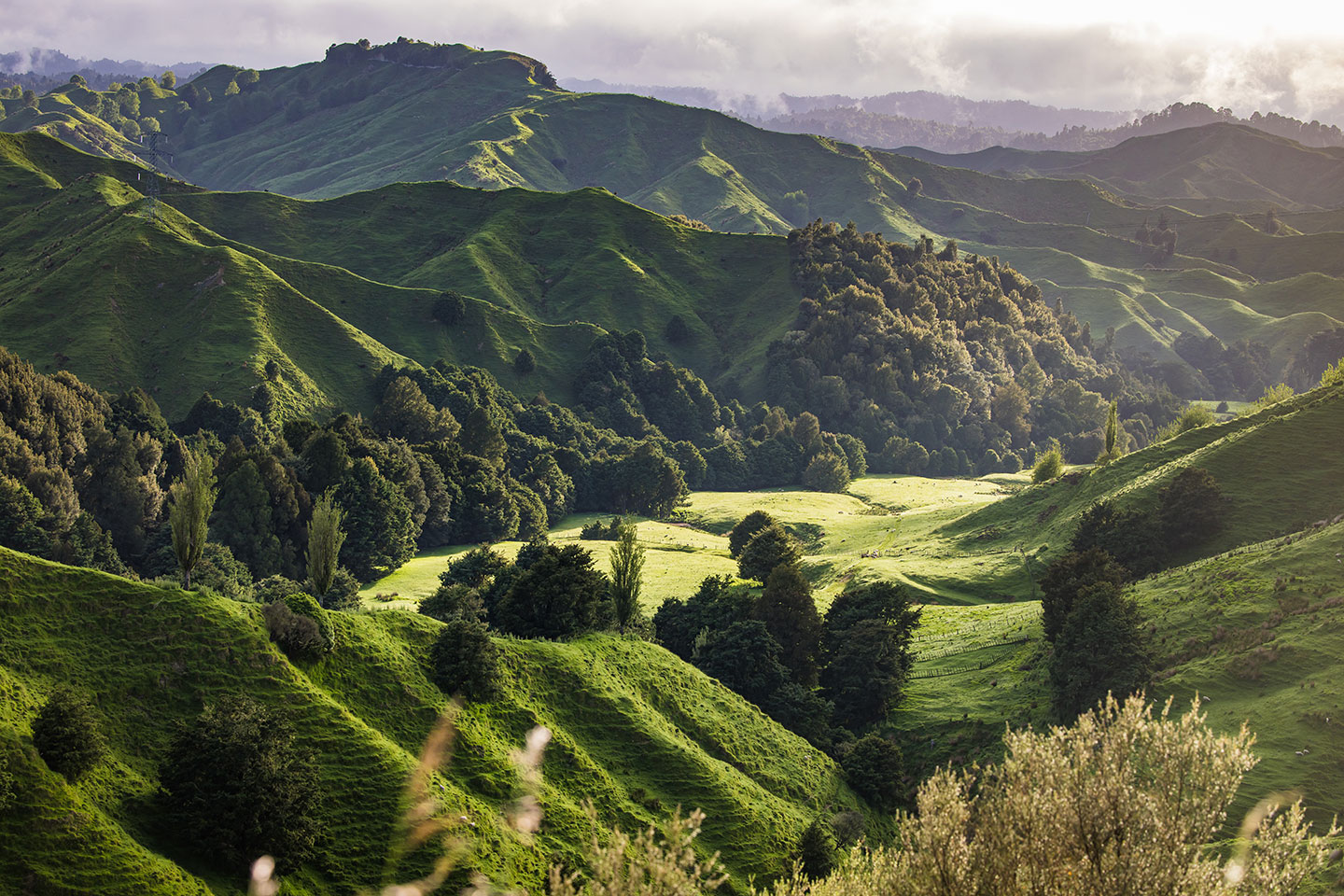
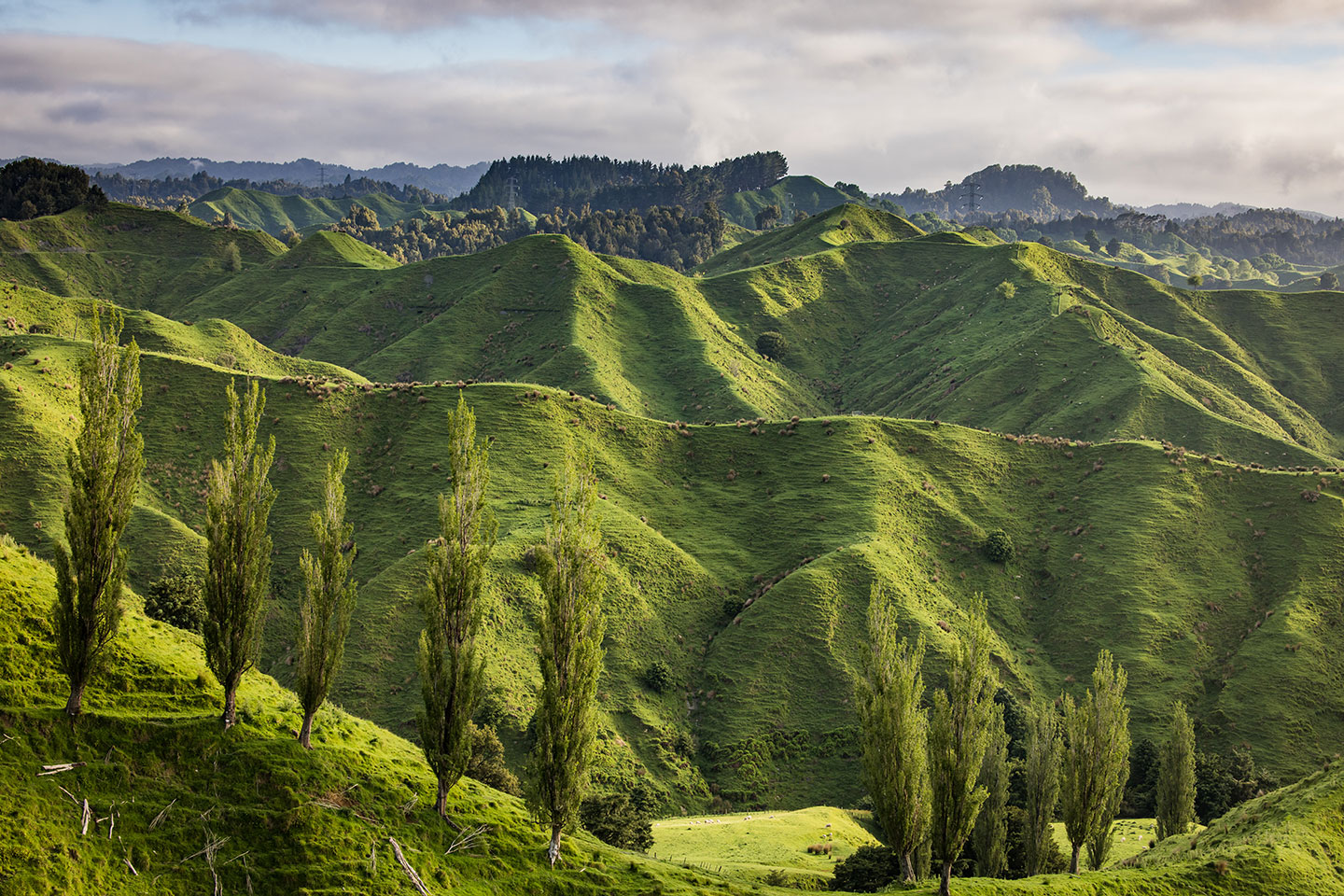
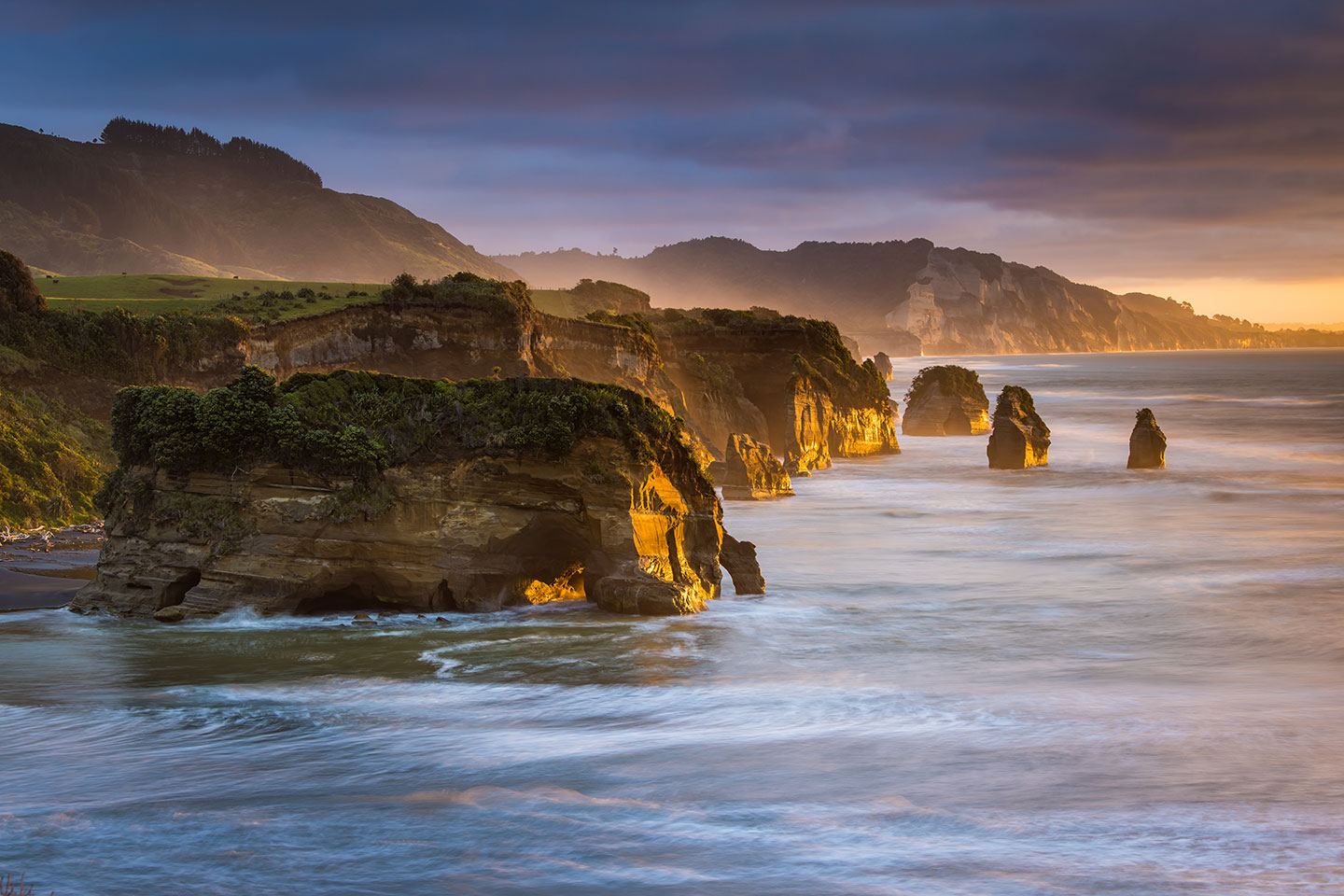
The Forgotten World Highway is a winding mountain road, once considered the main road for the towns along the way, but became out of use when a bigger road was constructed. It’s a scenic drive that takes you past some nice viewpoints, called saddles. From here you get a panoramic view over the surrounding mountains and hills. The sunrise was spectacular and with the morning light hitting the green hills, I felt like I was somewhere in Tuscany. I eventually reached the coast to end the day at the Tongaporutu sea stacks, known as the 3 sisters. The rough seas here constantly erode the limestone coast so there are now only 2 out of the 3 sisters still standing. Scientists predict that in another few decades, the other stacks will also be eroded by the sea. The weather wasn’t too great, but as the sun was setting, the light pierced over the horizon, basking the stacks in a beautiful golden hue.
Mount Taranaki National Park
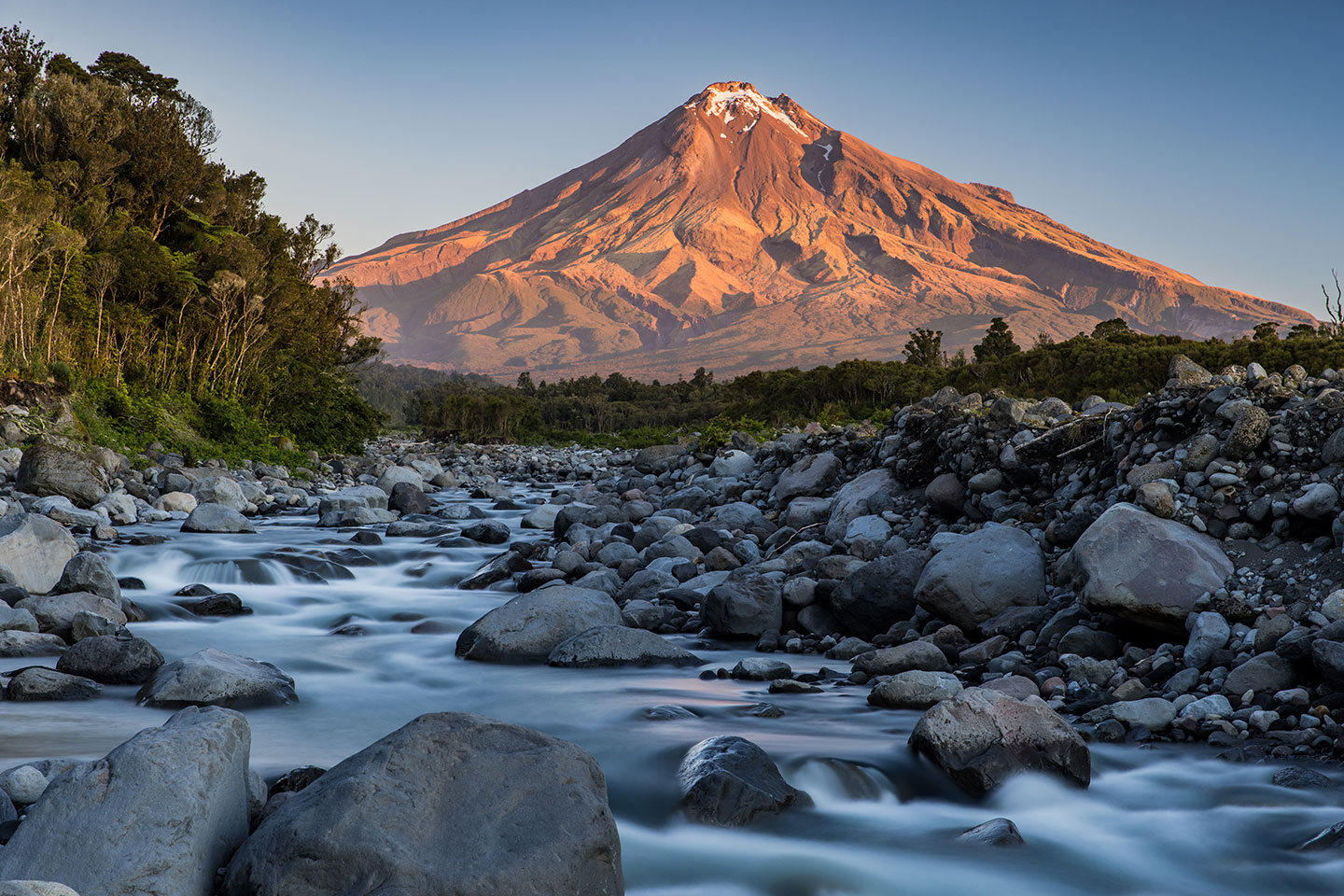
The active but sleeping volcano of Mount Taranaki can be seen from very far away and is impressive to see when you get closer. This is the perfect cone-shaped volcano, and it even had some snow on the top. Locals told me that the top is often covered in clouds, so I got lucky to see the volcano in all its glory. It’s tucked in the south west of the North Island and often skipped by tourists, but if you have some extra time in your itinerary, I highly recommend exploring this rural area of New Zealand.

Cape Palliser
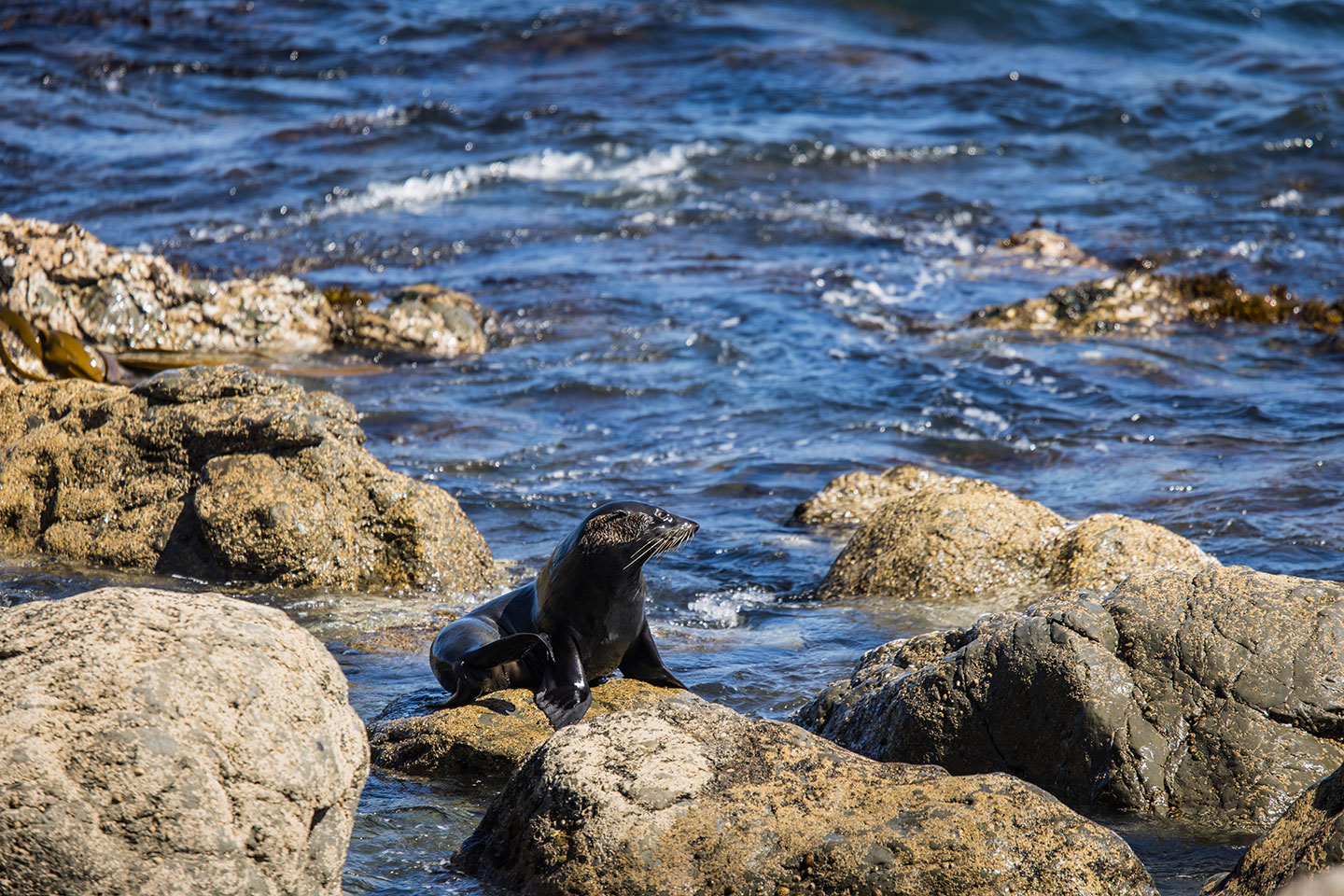
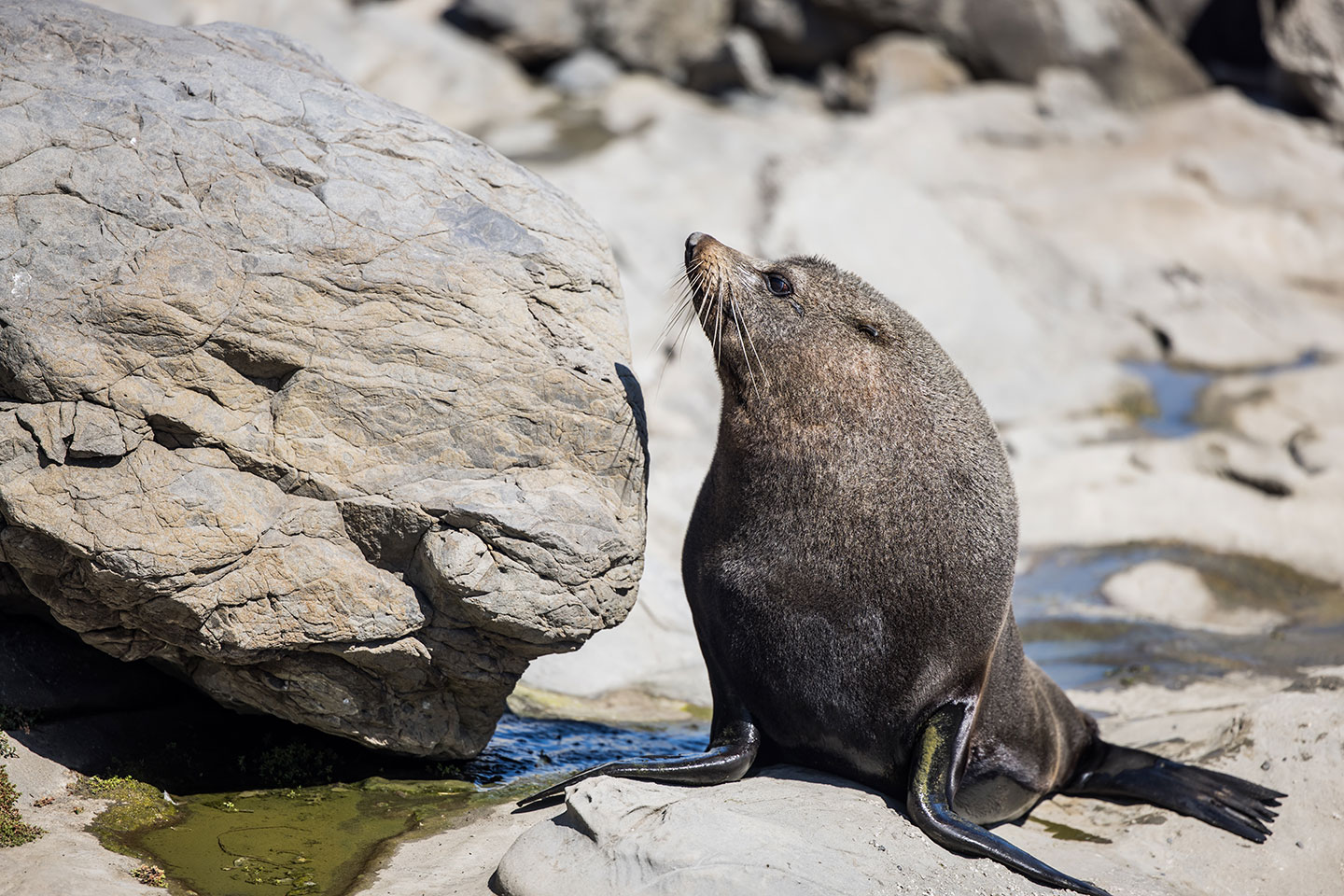
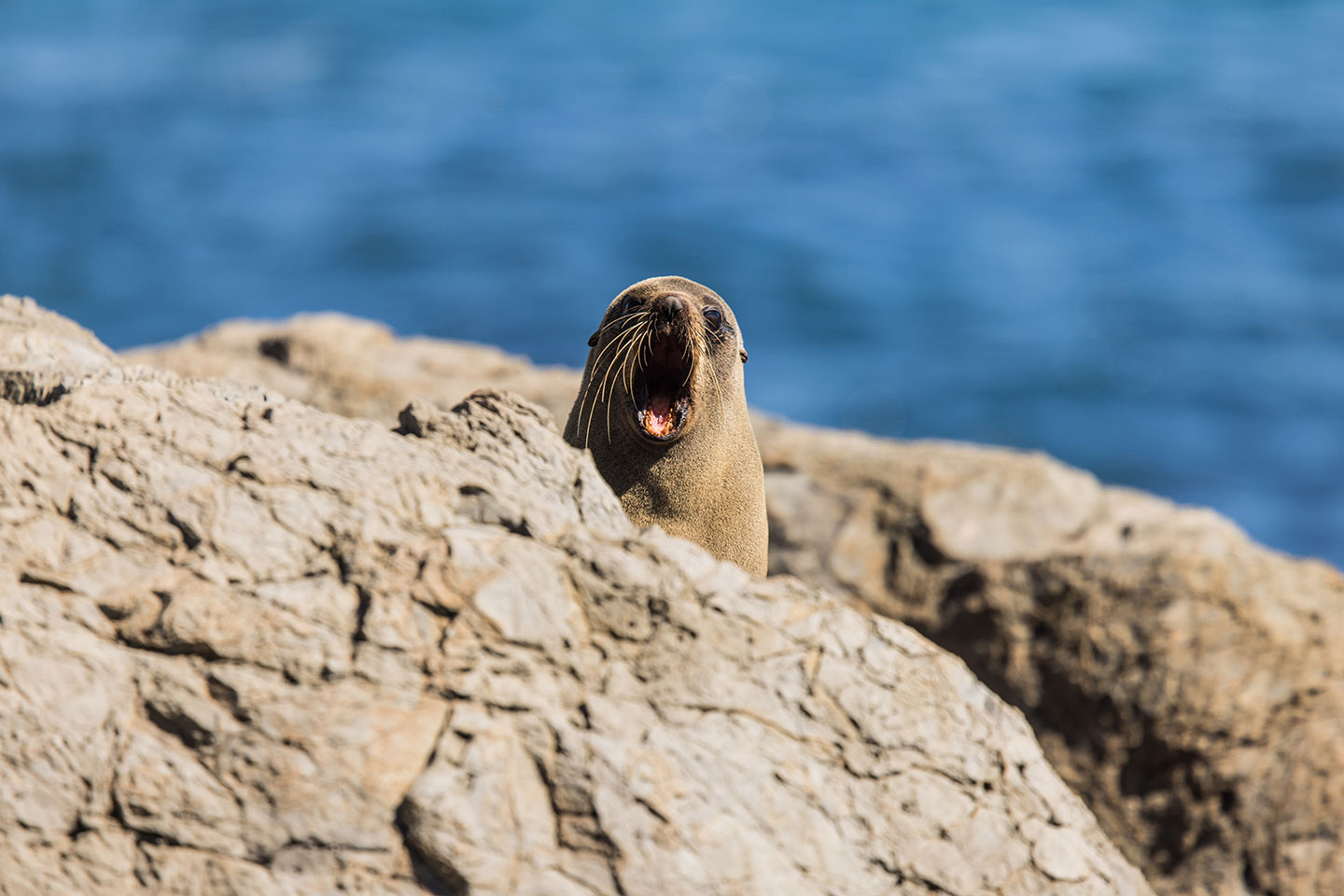
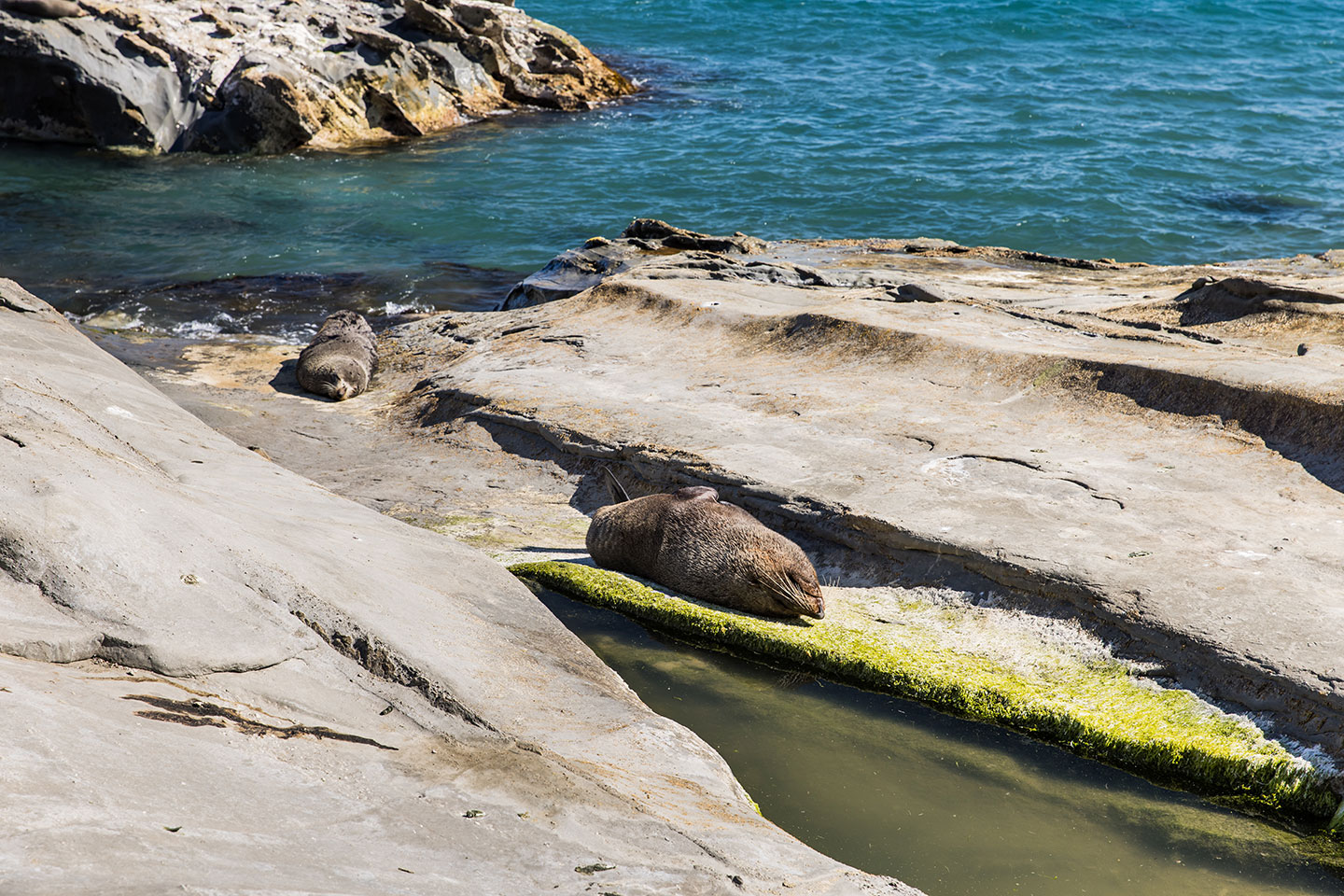
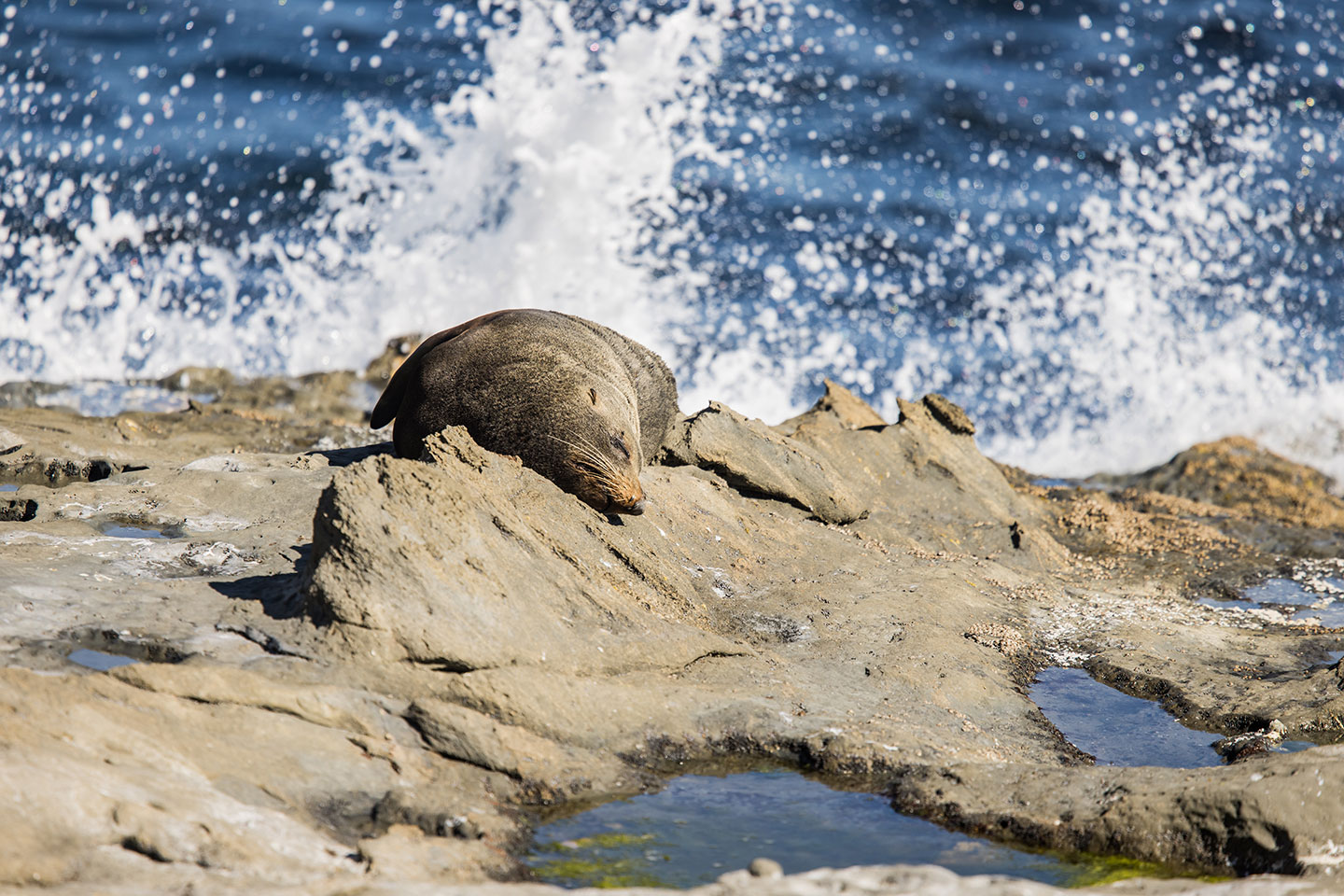
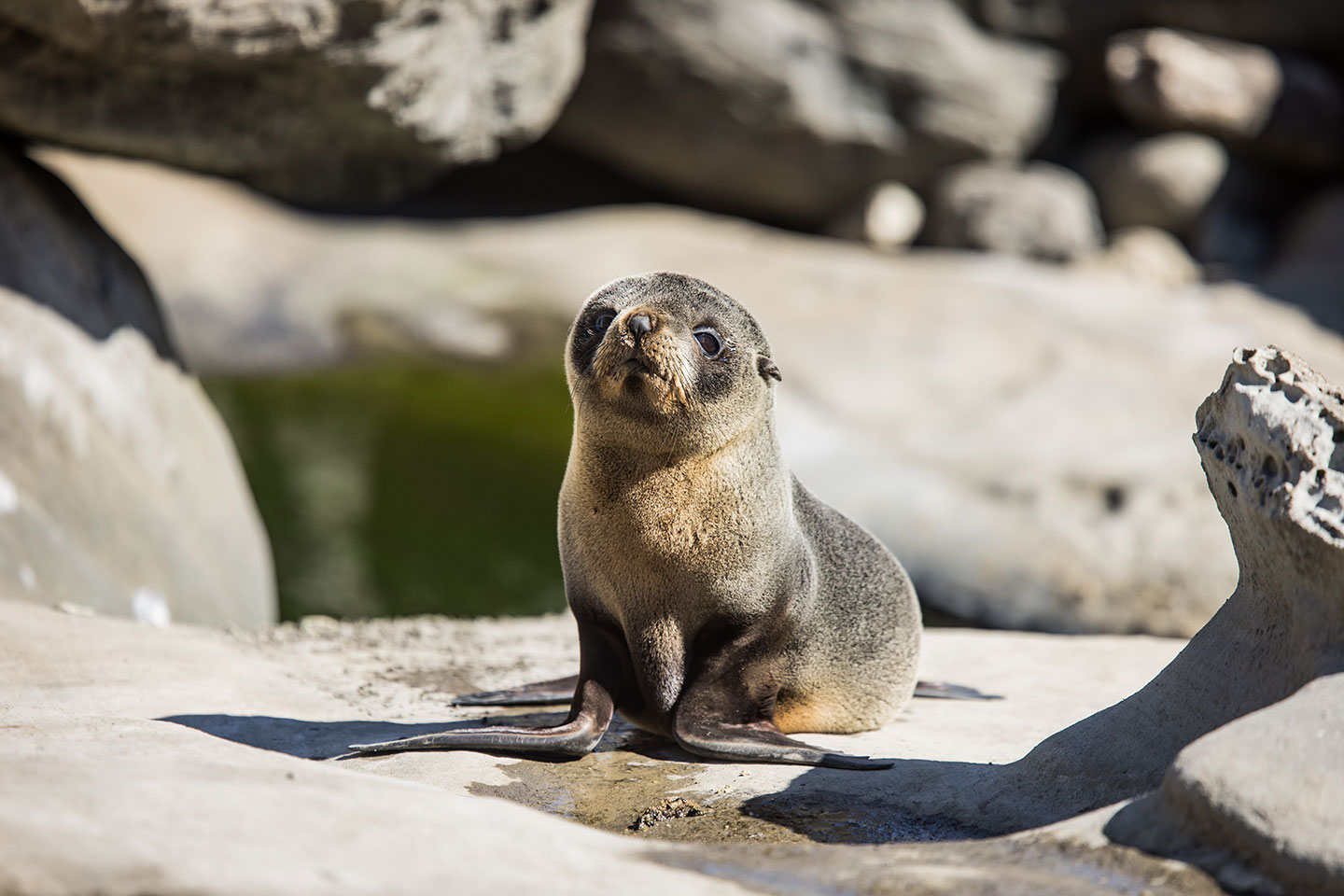
On my way down to Wellington to catch the ferry to the South Island, I stopped at Cape Palliser. Tucked away in a quiet corner of the island, there’s a fur seal colony that calls this place home. Here you can see several seals with pups basking in the sun and popping in and out of the water.
New Zealand North Island | Travel photography New Zealand | Best places to visit in New Zealand’s North Island